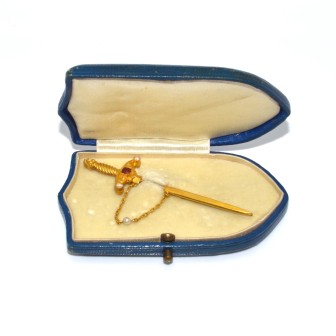
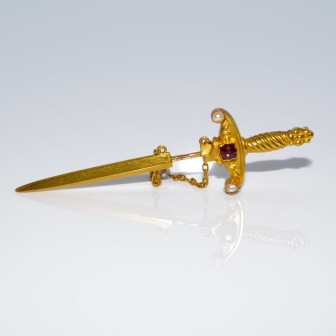
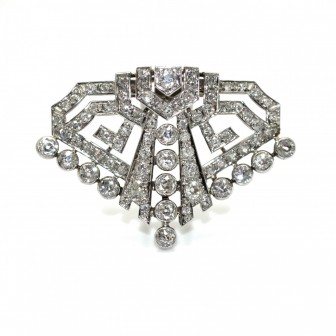
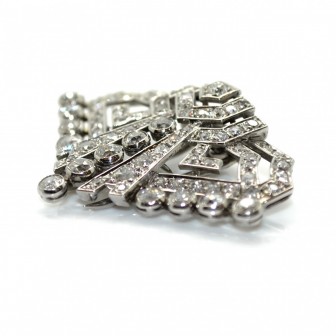
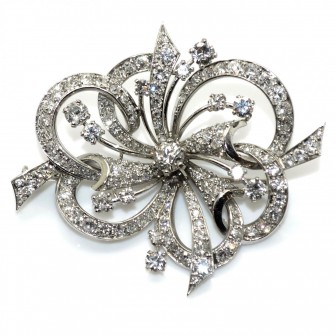
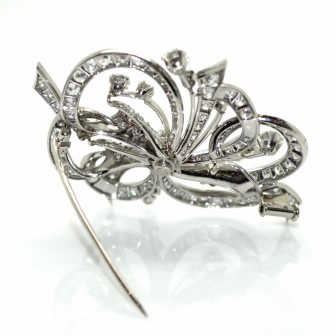
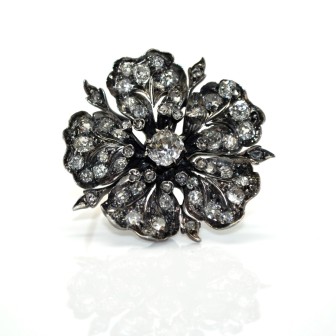
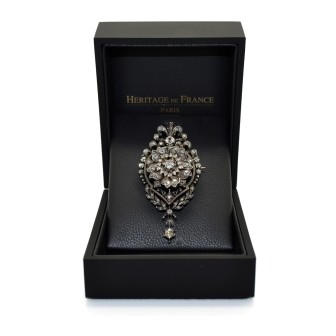
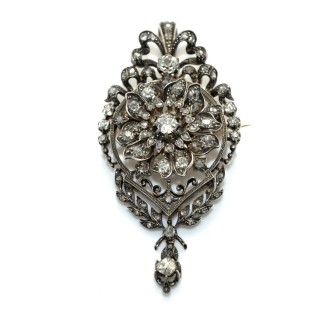
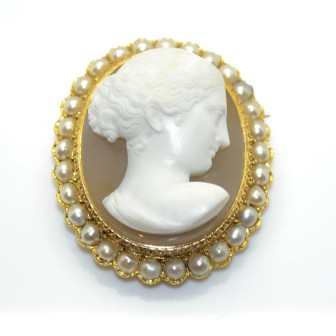
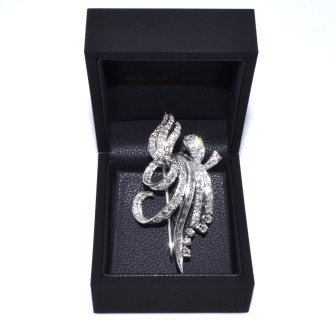
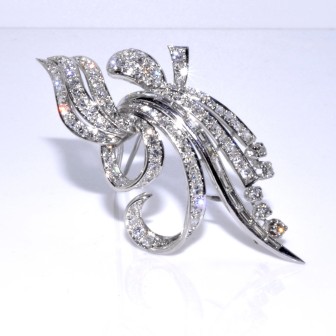
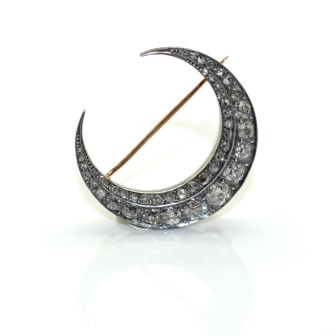
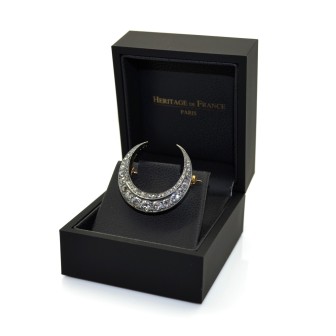
Antique brooches hold a distinctive place in the history of jewelry. From the second half of the 19th century through the 1940s, they display a wide variety of shapes, sizes, and manufacturing techniques. Figurative brooches, floral motifs, trembler brooches, geometric Art Deco designs, and substantial gold brooches from the 1940s reflect the styles associated with each period.
Crafted in gold, silver, or platinum, they may be set with diamonds, pearls, sapphires, rubies, or emeralds. Their appeal lies as much in their design and metalwork as in the gemstones they feature.
At Héritage de France®, we select antique brooches for their quality of craftsmanship, condition, and historical and jewelry significance.
During the second half of the 19th century, brooches played an important role in women's jewelry. They appeared in a wide variety of designs inspired by nature, animals, flowers, and more elaborate decorative motifs.
Yellow or rose gold could be engraved, chased, or enameled. Some brooches also combined silver settings with diamonds, using techniques characteristic of jewelry from this period.
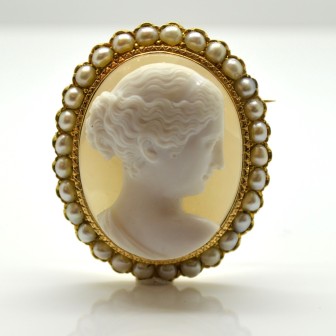
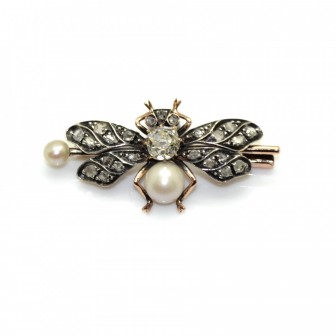
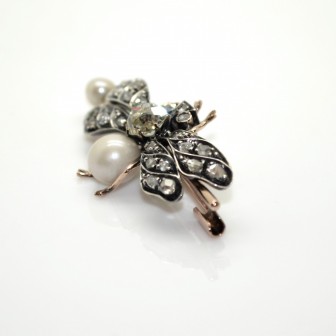
Figurative brooches depict animals, insects, flowers, or everyday objects. Some combine particularly detailed goldsmithing with diamonds or colored gemstones. Brooches featuring cameos, with subjects carved in relief from shell or hardstone, were also prominent in 19th-century jewelry.
Trembler brooches feature movable elements, generally mounted on small springs, that move with the wearer. This construction was particularly suited to floral motifs and diamond-set compositions, adding movement to the design.
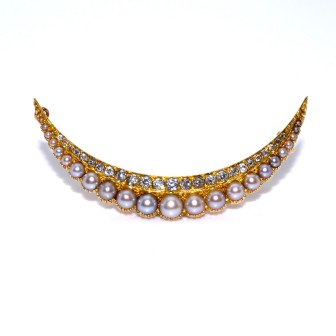
In the late 19th and early 20th centuries, some brooches adopted lighter, often openwork designs in which diamonds and pearls played an important role.
Garlands, bows, foliage, and floral motifs could be crafted in gold or platinum, sometimes using settings that combined different metals.
The delicacy of the design and the precision of the stone setting allowed for compositions in which the metal became less visually prominent, emphasizing the gemstones and decorative motifs.
Some brooches were also designed with fittings that allowed them to be worn as pendants. These brooch-pendants, found in jewelry from several periods, illustrate the versatility sought in certain jewelry designs.
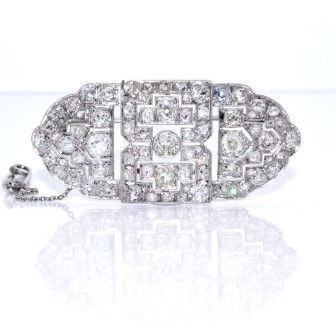
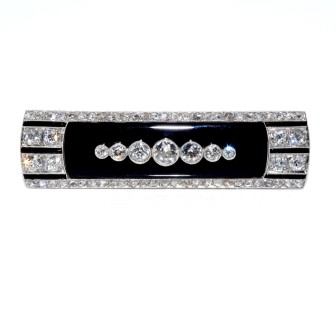
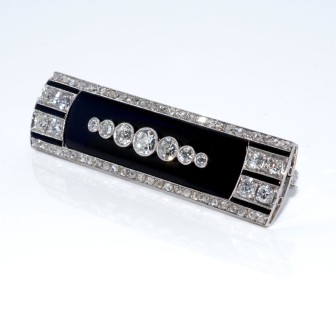
During the 1920s and 1930s, brooches adopted the geometric lines characteristic of Art Deco. Art Deco plaque brooches, often rectangular or elongated, allowed for symmetrical compositions incorporating diamonds of different shapes and cuts.
Platinum was particularly prominent in these designs, sometimes combined with sapphires, rubies, emeralds, or onyx to create contrasts of color.
Old-cut diamonds, old European-cut diamonds, baguette-cut diamonds, and rose-cut diamonds could all be incorporated into the design. Geometric shapes and openwork compositions are among the important characteristics of jewelry from this period.
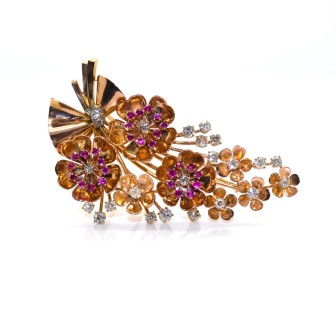
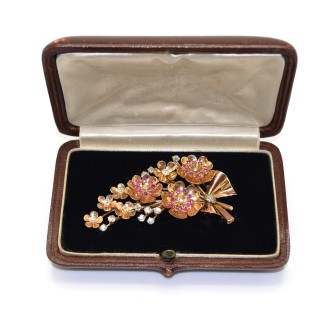
During the 1940s, jewelry generally became more substantial in volume, while yellow and rose gold became increasingly prominent.
Brooches could feature stylized motifs, geometric shapes, or figurative compositions. The craftsmanship, relief, and volume of the metal became essential elements of their design.
Dress clips also formed an important category. Unlike traditional brooches secured with a pin, they use a clip mechanism to attach to clothing. Some designs consist of two separate clips that can be worn individually or joined together to form a larger composition.
Attributing a period to an antique brooch requires consideration of a combination of consistent characteristics. The style and proportions of the piece are examined together with its construction, manufacturing and stone-setting techniques, the metals used, and any hallmarks or signatures that may be present.
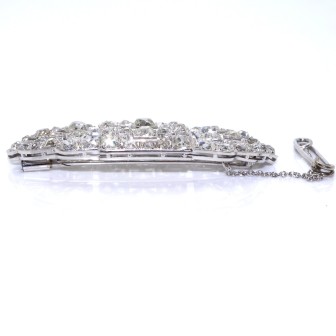
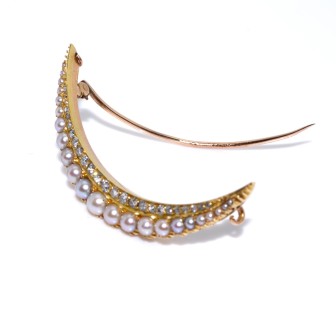
Fastening systems can also provide useful information. The shape of the pin, the presence of a hinge, safety catch, or clip mechanism should be examined in the context of the piece as a whole.
Antique brooches have sometimes been altered during their history. Some have received new fastening systems or have been adapted to be worn as pendants. Whenever possible, these modifications should be distinguished from the original construction.
At Héritage de France®, we distinguish antique brooches, primarily made between the second half of the 19th century and the 1940s, from vintage brooches, mainly corresponding to pieces created from the 1950s through the 1980s.
The term pre-owned jewelry does not refer to a particular period. It simply indicates that a piece has previously been owned. An antique, vintage, or more recent brooch can therefore be pre-owned.
Héritage de France® presents a regularly updated selection of antique brooches at our jewelry store in Paris, located at the entrance to the Village Suisse: Napoleon III brooches, figurative designs, Belle Époque and Art Deco pieces, gold brooches from the 1940s, cameos, dress clips, and brooch-pendants.
All of our jewelry is inspected before being offered for sale. With antique brooches, particular attention is paid to the condition of pins, hinges, clasps, and fastening mechanisms, as well as the security of diamond and gemstone settings, to ensure that the pieces can be worn safely and comfortably.
Our store is open to the public, and you are welcome to visit, see, and try on our antique brooches without an appointment.
Résultats 1 à 13 sur 13