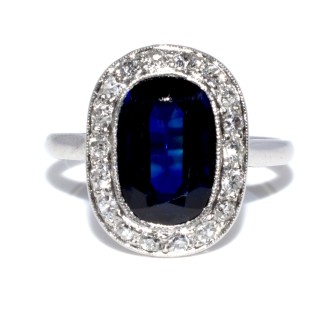
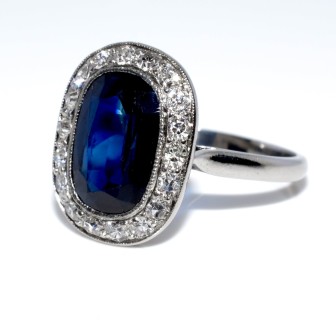
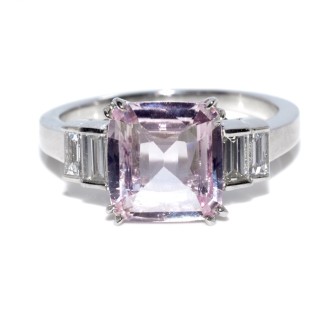
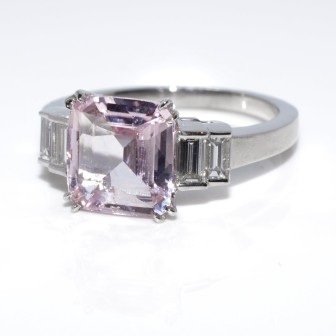
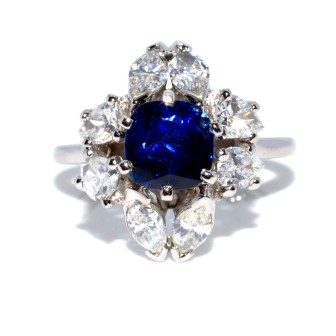
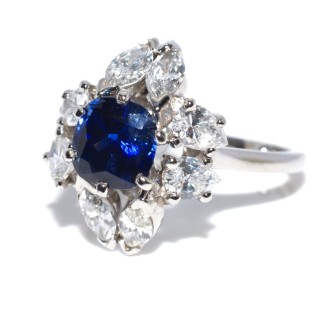
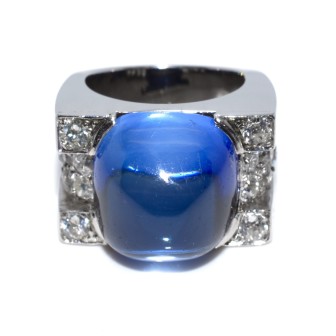
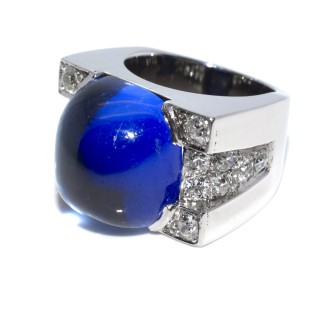
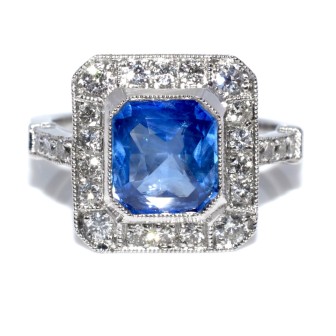
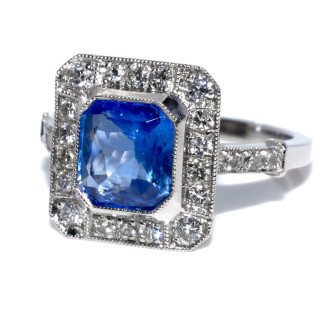
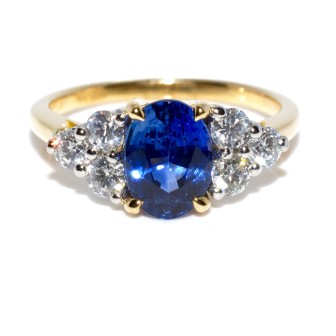
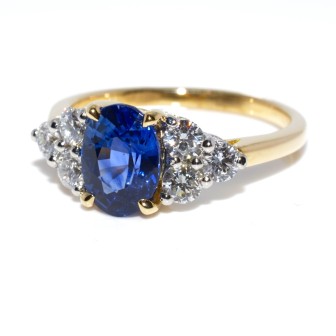
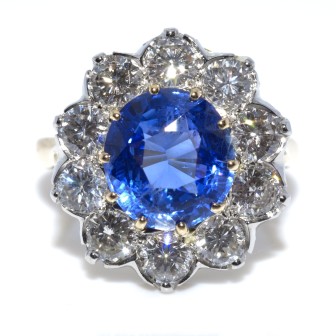
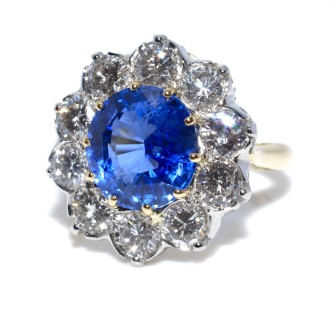
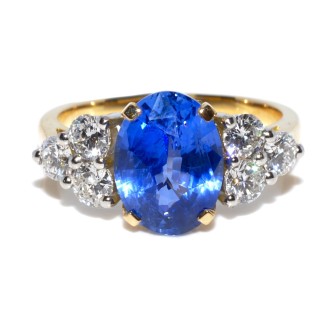
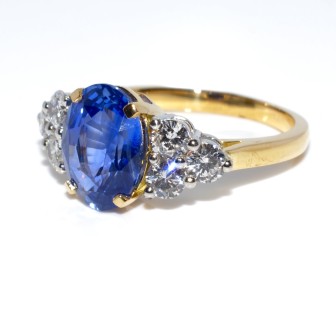
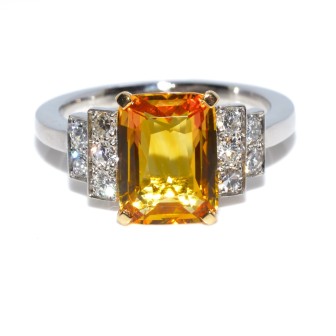
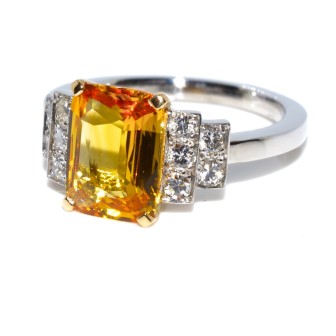
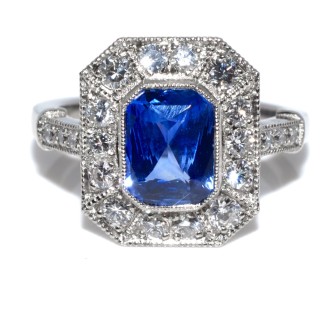
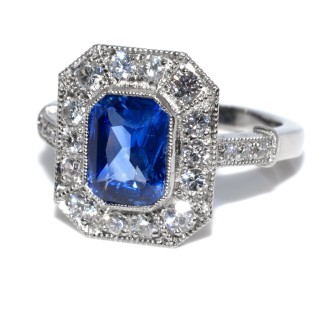
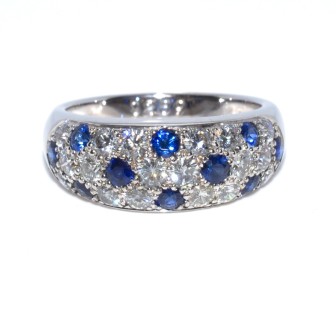
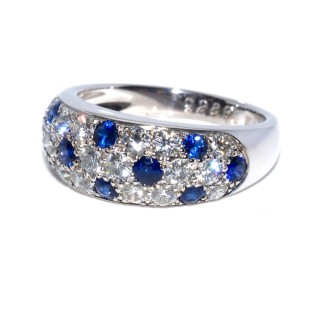
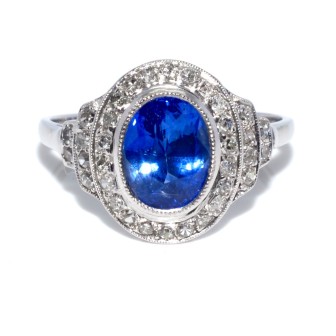
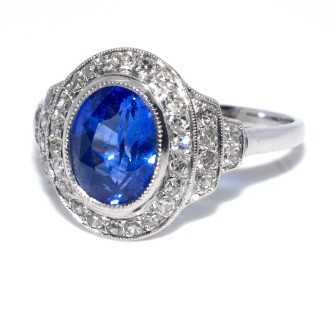
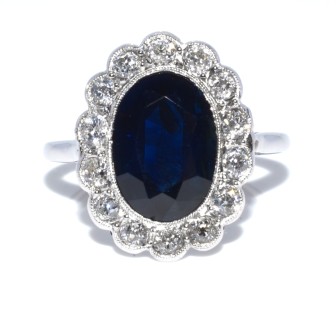
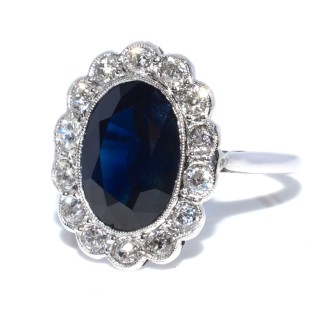
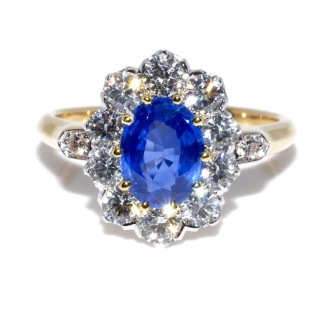
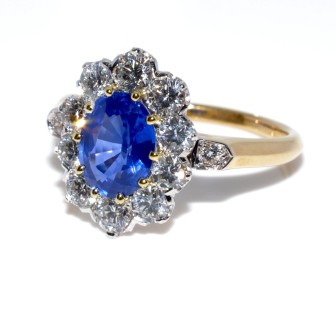
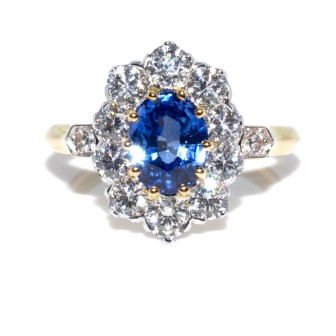
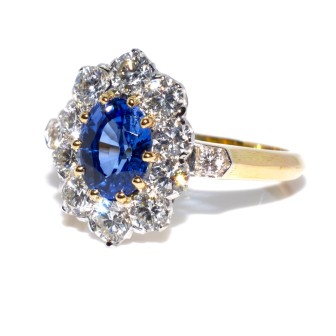
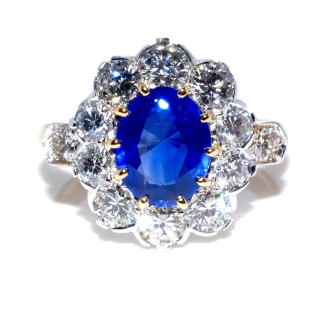
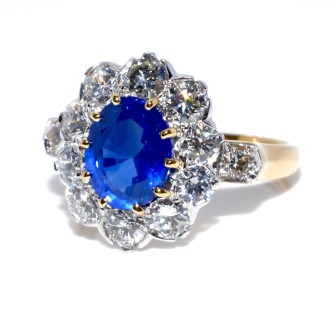
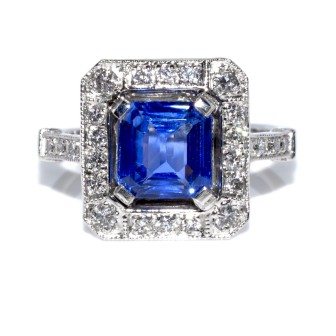
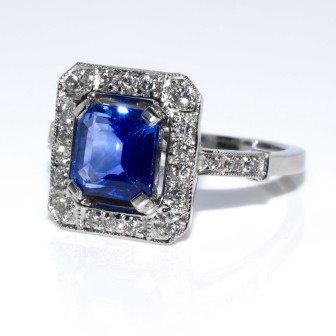
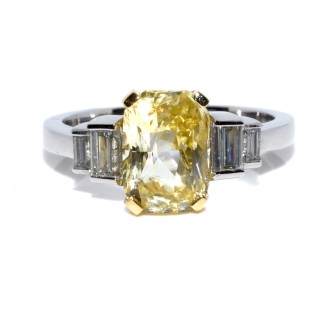
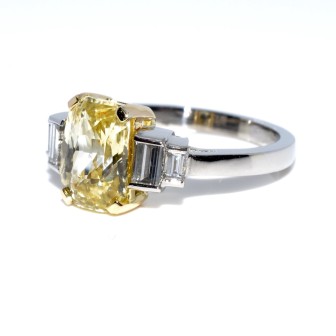
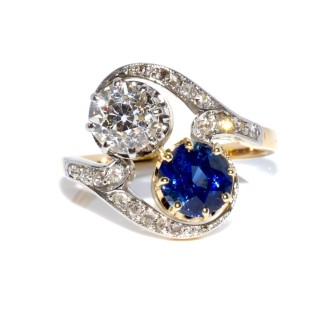
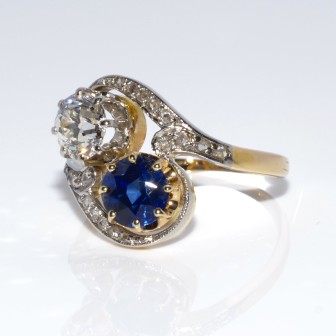
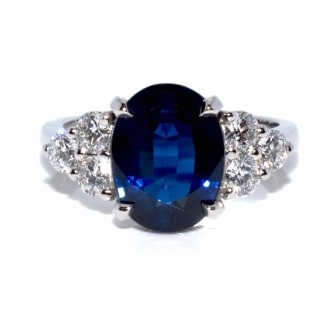
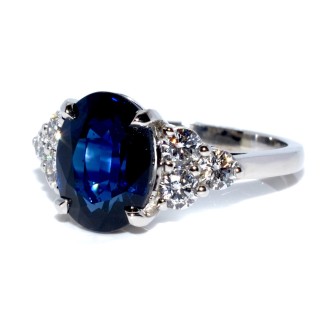
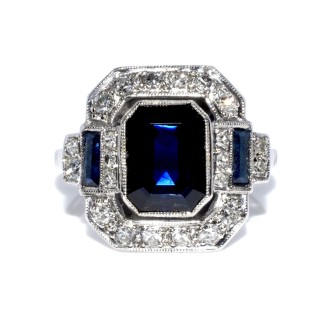
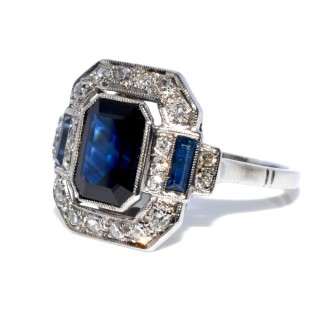
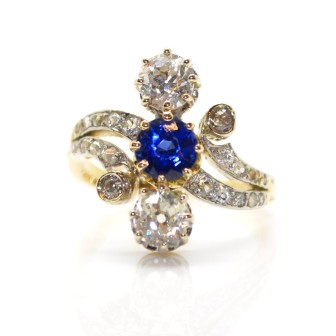
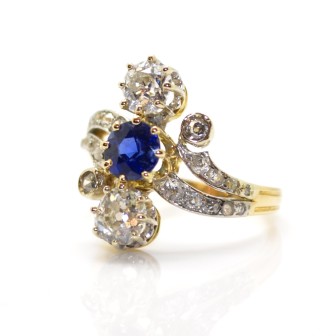
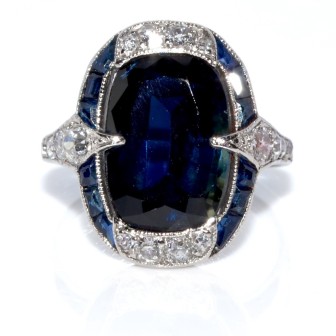
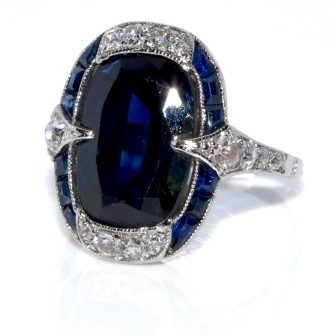
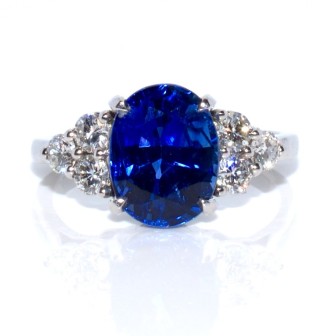
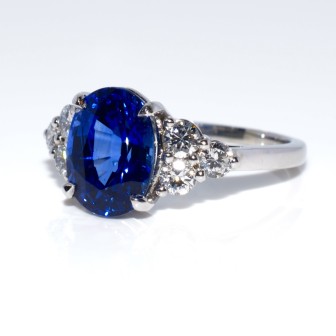
Sapphire is particularly well suited to engagement rings. Its high hardness, wide range of colors and beautiful combination with diamonds make it ideal for solitaires, Pompadour rings, three-stone rings and Art Deco settings.
Sapphire belongs to the corundum mineral family. With a hardness of 9 on the Mohs scale, it is one of the hardest natural gemstones used in jewelry, second only to diamond.
At Héritage de France®, we offer antique and vintage sapphire rings as well as more recent creations. Some feature sapphires removed from antique jewelry, carefully selected and reset in newly made settings.
Blue is the color most traditionally associated with sapphire, but corundum occurs in a much broader range of colors.
Sapphires can be blue, pink, yellow, orange, green or purple, as well as various intermediate shades. Red corundum, on the other hand, is known as ruby.
For a blue sapphire, color is evaluated according to factors including hue, saturation and tone. Two sapphires of the same weight can therefore have very different appearances.
A very dark color does not necessarily indicate higher quality. The balance and distribution of color throughout the stone, as well as its appearance under different lighting conditions, are also important.
Ultimately, the choice is aesthetic: a deep blue, a lighter blue or a pale pink sapphire can give an engagement ring a completely different character. It is a matter of personal taste.
A sapphire solitaire places the focus directly on the center stone. The setting is generally relatively understated, emphasizing the sapphire’s color, proportions and cut.
A Pompadour ring, or cluster ring, features a central sapphire surrounded by diamonds. The contrast between the sapphire’s color and the brilliance of the diamonds enhances the visual presence of the center stone.
Three-stone rings can also combine a central sapphire with two diamonds on either side.
In authentic period Art Deco rings, sapphire may be incorporated into more complex geometric compositions, particularly in combination with platinum and diamonds.
The choice therefore depends as much on the sapphire as on the overall architecture of the ring.
Unlike diamonds, sapphires are not evaluated according to a universal grading system equivalent to the 4Cs.
Color is a major factor, but it should be considered together with the stone’s transparency, cut, proportions, weight and any inclusions.
Inclusions are common in natural sapphires. They can provide important gemological information and should not automatically be considered defects.
The quality of the cut also influences the appearance of the stone. A well-proportioned cut can help showcase its color and brightness.
A sapphire should therefore be evaluated according to a combination of characteristics, rather than any single criterion.
Heat treatment is a traditional process that has long been used to modify or improve certain characteristics of many sapphires, particularly their color or transparency.
A heated sapphire remains a natural sapphire. It should not be confused with a synthetic sapphire created in a laboratory.
Natural sapphires showing no indications of heat treatment are rarer and, when other characteristics are comparable, can be particularly sought after.
However, the absence of heat treatment alone does not determine the quality or value of a stone. Color, transparency, dimensions, cut, possible geographic origin and overall appearance remain essential considerations.
When determining the presence or absence of heat treatment is important, the stone should be analyzed by a qualified gemological laboratory.
Certain regions are historically associated with sapphire production, including Sri Lanka, Kashmir, Burma, Madagascar and East Africa.
Geographic origin cannot, however, be reliably determined by visual examination alone. It requires advanced gemological analysis, and in some cases a laboratory may not be able to reach a definitive conclusion.
Origin can influence the desirability and value of certain sapphires, but it is not by itself a measure of quality.
At Héritage de France®, we only state a specific geographic origin when it is supported by the available gemological evidence.
It is important to distinguish between the age of the gemstone, the period in which it was cut and the age of the setting.
A sapphire in an antique ring may have been cut and set when the ring was originally made, but a gemstone may also have been replaced at some point during the history of the piece.
Conversely, a sapphire from an antique jewel can be removed and incorporated into a new creation.
Antique gemstones sometimes have less standardized cuts than contemporary stones, with proportions adapted to the original crystal or to the cutting practices of their period.
An antique sapphire reset today remains an antique gemstone, but the newly made setting is a contemporary creation.
For an important sapphire, a report issued by an independent gemological laboratory can provide information that may be difficult or impossible to establish with certainty through visual examination alone.
Depending on the stone and the tests performed, the laboratory may confirm whether the sapphire is natural and look for indications of heat treatment.
Under certain conditions, it may also provide an opinion on the geographic origin of the sapphire.
A gemological report is not an appraisal of monetary value and does not replace an examination of the ring itself. On an antique piece, the setting, hallmarks, stone settings and overall condition should also be carefully evaluated.
At Héritage de France® in Paris, we offer a selection of antique, vintage and contemporary sapphire engagement rings.
Our collection includes solitaires, Pompadour rings, three-stone rings and Art Deco rings, combining sapphires and diamonds depending on the piece.
Some rings are entirely antique or vintage. Others are Héritage de France® creations made, in particular, with sapphires sourced from antique jewelry, examined and selected before being reset in newly made settings.
Choosing a sapphire engagement ring therefore involves several considerations: the color and characteristics of the gemstone, any treatment it may have undergone, the design of the setting, its proportions and the way the finished ring looks on the hand.
Résultats 1 à 24 sur 41