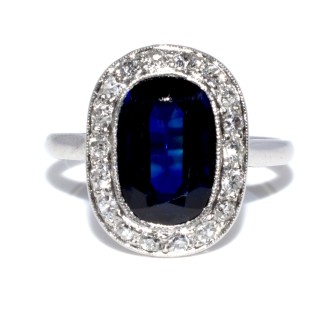
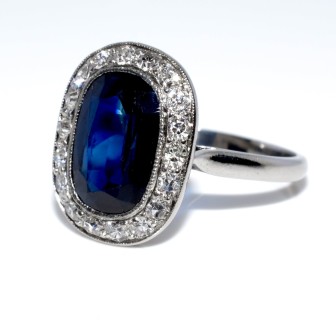
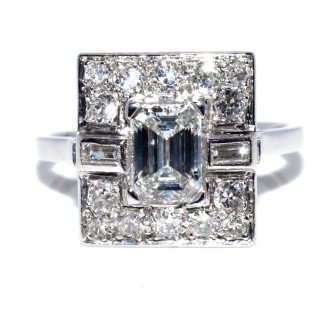
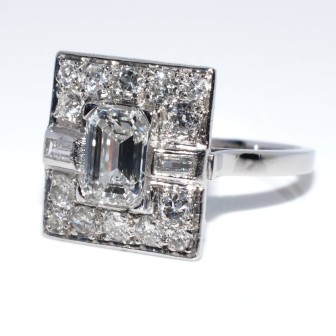
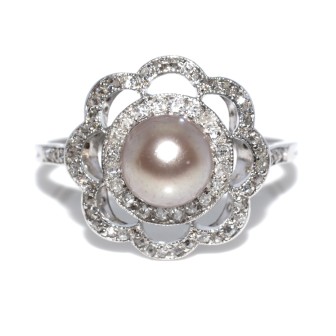
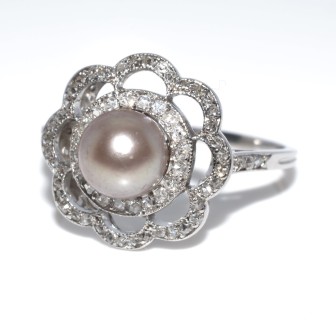
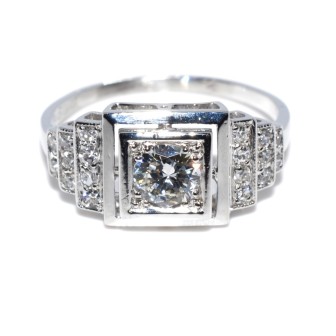
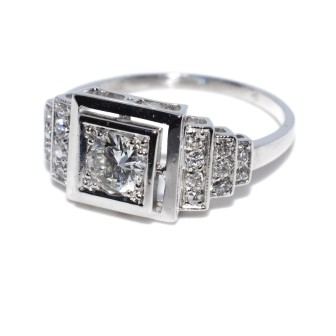
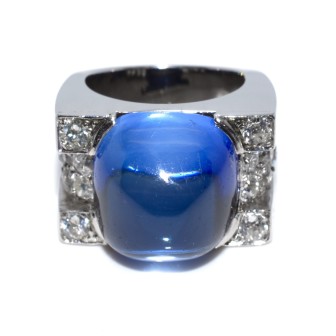
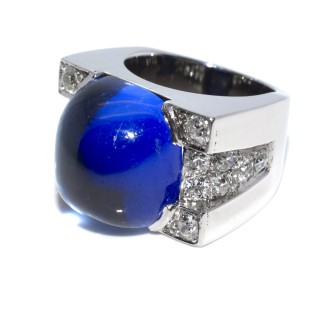
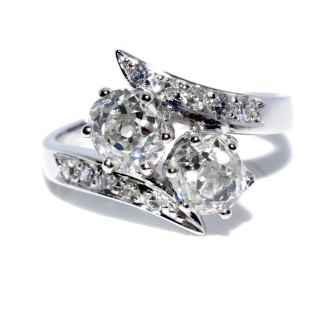
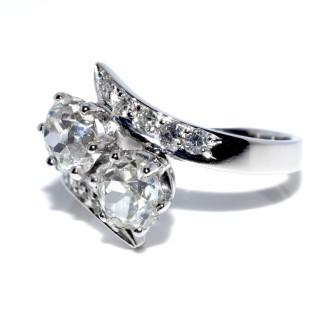
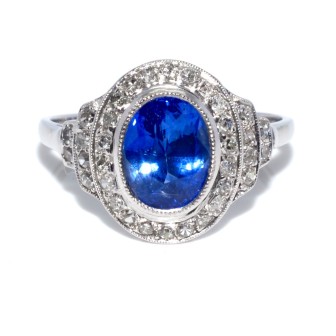
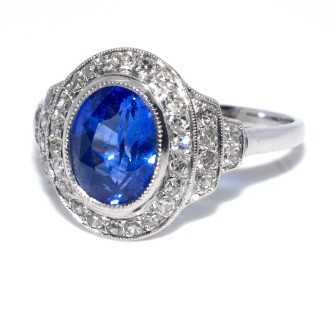
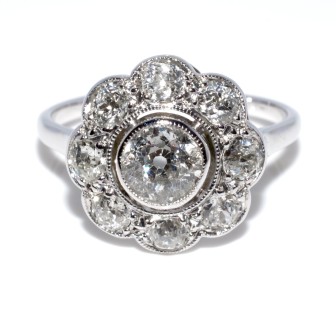
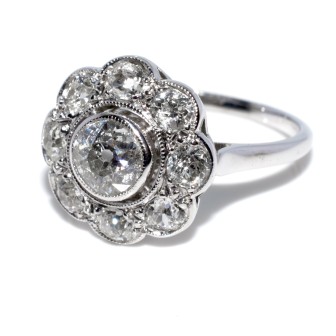
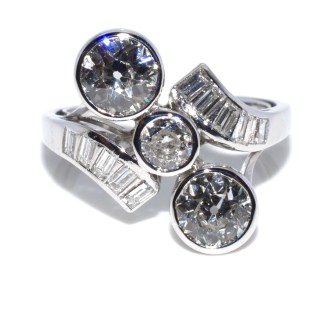
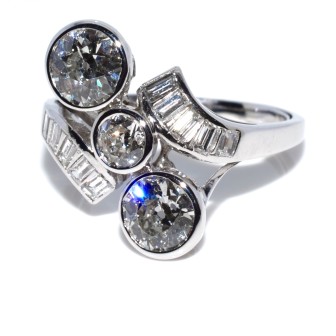
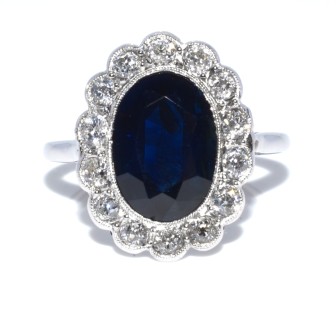
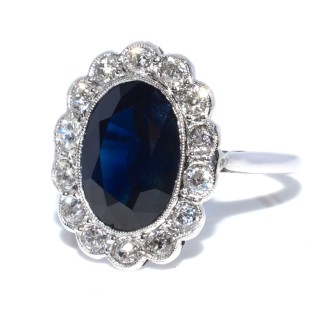
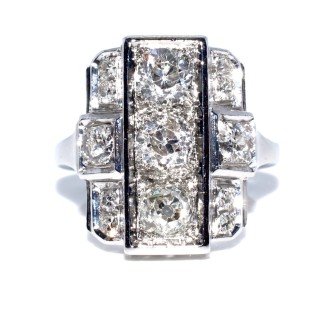
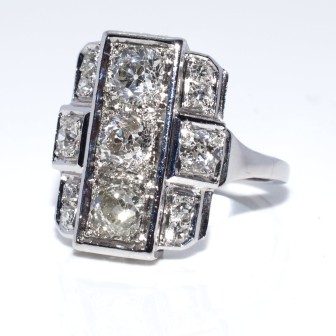
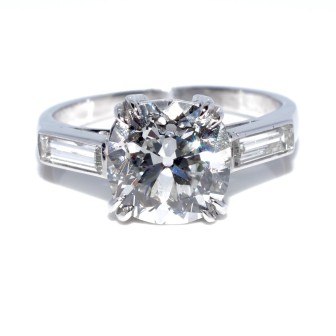
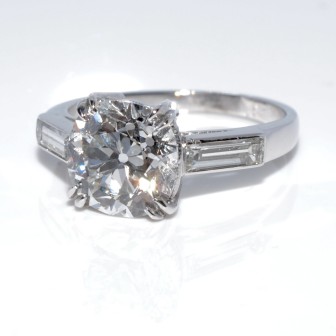
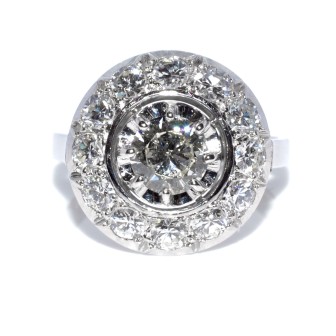
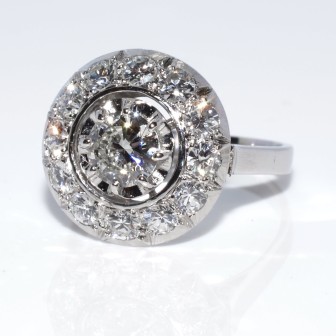
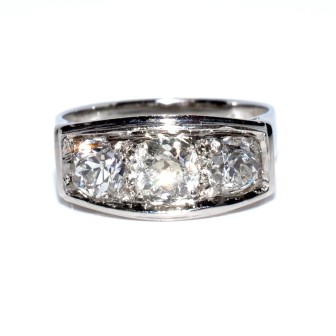
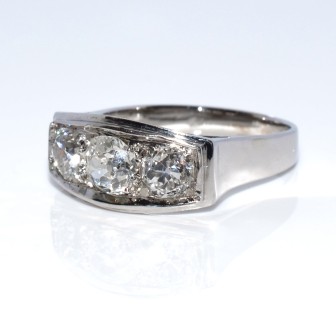
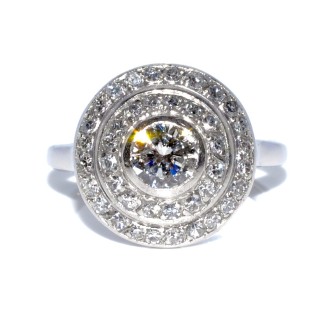
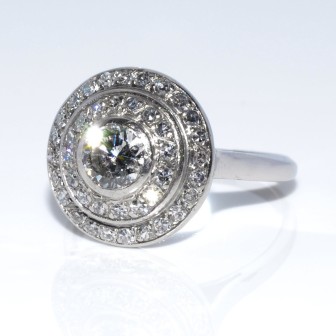
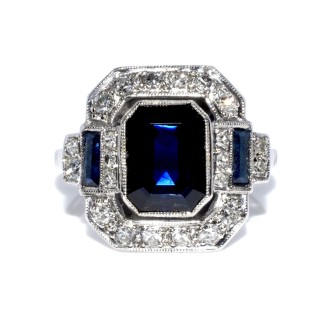
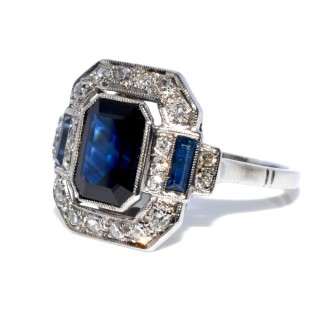
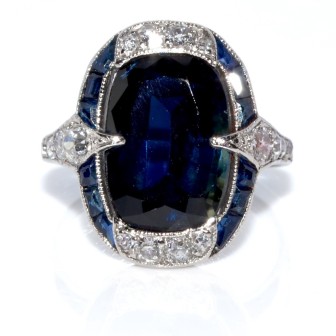
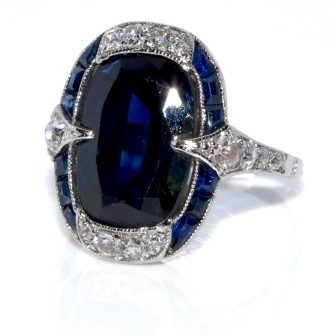
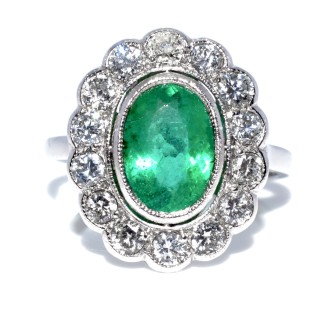
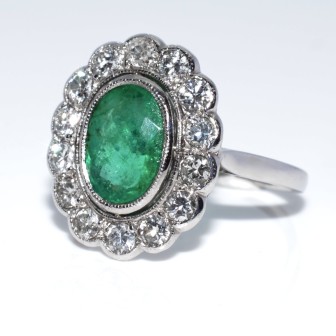
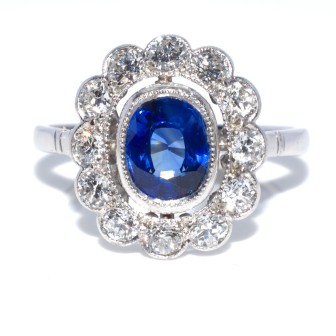
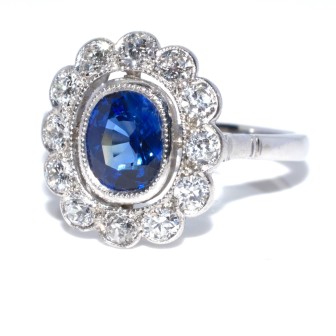
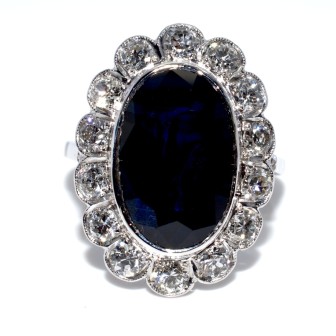
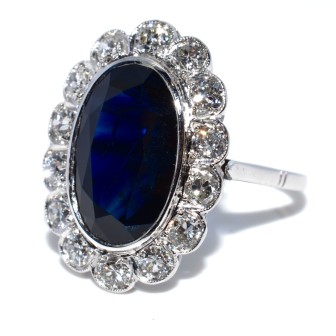
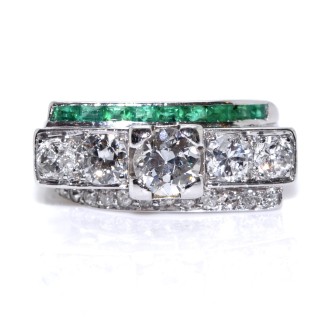
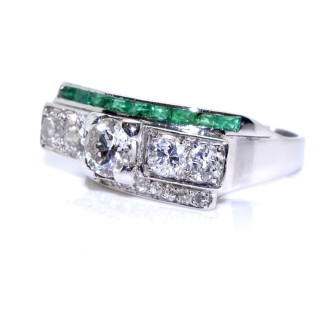
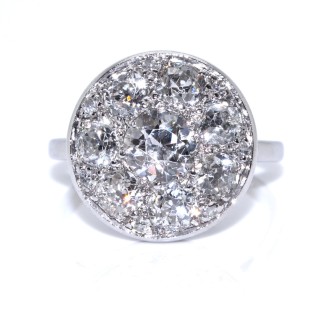
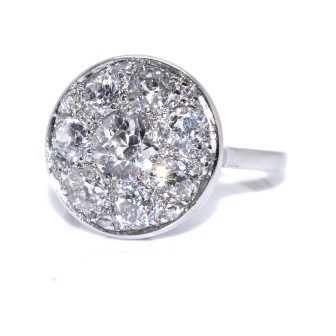
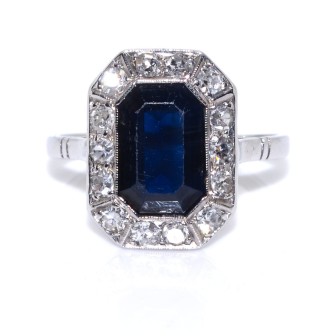
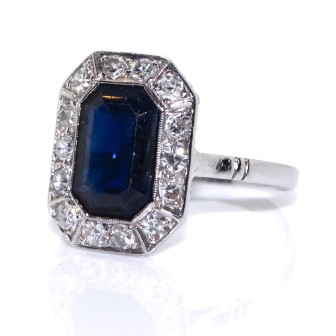
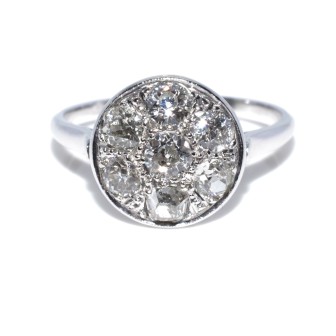
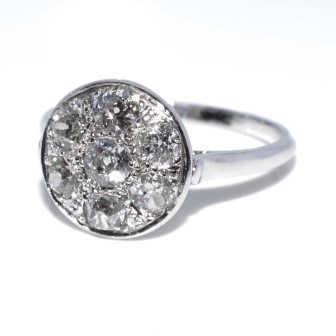
An Art Deco ring is primarily characterized by geometric design, symmetry and precise construction. Circles, rectangles, straight lines, cut corners and architectural compositions gradually replaced the flowing curves and naturalistic motifs associated with Art Nouveau jewellery.
The movement developed during the 1910s and reached its height during the 1920s and 1930s. The 1925 Exposition Internationale des Arts Décoratifs et Industriels Modernes in Paris marked a defining moment in the development of this new aesthetic.
In jewellery, Art Deco produced designs whose clean lines and strong geometry can still appear remarkably modern today.
There is no single type of Art Deco ring. The style can be found in plaque rings, cluster rings, solitaires, trilogy rings, dome rings and other geometric compositions.
Several characteristics are nevertheless recurrent: symmetry, openwork settings, geometric lines and gemstones whose cuts form an integral part of the overall design.
On an antique ring, the construction of the setting can provide valuable information. The basket, stone settings, openwork, profile and workmanship beneath the gemstones can help assess both the quality and period of manufacture.
Hallmarks, when present and legible, may also provide important information about the precious metal, country of manufacture and, in some cases, the workshop or maker.
Platinum occupies an important place in Art Deco jewellery. Its mechanical properties allow jewellers to create relatively fine settings and intricate openwork structures while securely holding gemstones.
Its naturally white colour is particularly well suited to diamonds, as the metal surrounding the stones does not introduce a yellow tone.
Many French rings from this period also combine 18k gold and platinum. Gold may be used for all or part of the shank, while platinum is employed for the sections set with diamonds.
What Diamond Cuts Are Found in Art Deco Rings?
Antique Art Deco rings frequently feature old-cut diamonds, whose proportions and optical character differ from those of modern brilliant-cut stones.
The period is also notable for its use of geometric cuts. Baguette-cut diamonds, step-cut stones and calibrated gemstones allowed lapidaries and jewellers to create highly structured compositions.
A ring might therefore combine a round old-cut or emerald-cut centre diamond with baguette diamonds, while smaller old-cut stones complete the design.
This combination of different diamond cuts is one of the most distinctive characteristics of jewellery from the 1920s and 1930s.
Although diamonds played a central role in Art Deco jewellery, colour was also widely used.
Sapphires are particularly suited to the Art Deco aesthetic. They may form the centre stone or be cut into small calibrated elements, baguettes or geometric shapes that emphasize the structure of the setting.
Emeralds were also frequently used, particularly as centre stones surrounded by diamonds. The contrast between their green colour and the whiteness of platinum and diamonds reinforces the graphic quality of the design.
Rubies, onyx and other gemstones can also be found, often creating strong colour contrasts and clearly defined geometric patterns.
One of the most remarkable qualities of these jewels is their modernity of design. A century after they were made, many Art Deco rings still appear surprisingly contemporary.
This is largely due to their geometry, proportions and disciplined design. A platinum and diamond plaque ring from the 1920s, for example, can be worn today without appearing dated.
Strong lines, baguette diamonds, openwork settings and symmetrical compositions also correspond closely to the contemporary taste for graphic jewellery.
An authentic Art Deco ring can therefore be appreciated as an antique jewel, but also simply worn as a striking piece of modern-looking jewellery.
Choosing an Art Deco ring requires careful examination of both the gemstones and the setting.
The condition of the stone settings is particularly important on a jewel that may be around a century old. The shank, consistency of the gemstones, possible restorations and overall quality of construction should also be examined.
An old alteration or replacement stone does not necessarily diminish the interest of a ring, but such interventions should be identified and taken into account when assessing the piece.
For significant diamonds or coloured gemstones, a report from a recognized gemmological laboratory can provide additional information about the stone, its characteristics and any detectable treatments.
At Héritage de France®, of course! We are specializesd in antique jewellery and offer a selection of authentic Art Deco rings dating from the 1920s and 1930s in Paris.
Our collection includes platinum and diamond rings, plaque rings, sapphire and emerald cluster rings, and designs combining old-cut and baguette-cut diamonds.
Each ring is examined before being offered for sale. Gemstones, precious metals, settings, hallmarks and signatures, when present, are carefully checked, and any necessary restoration can be carried out so that the jewel can be worn in appropriate conditions.
Choosing an antique Art Deco ring means acquiring a jewel made almost a century ago whose geometry, craftsmanship and remarkably modern design remain highly relevant today.
Résultats 1 à 24 sur 35