6 400 €
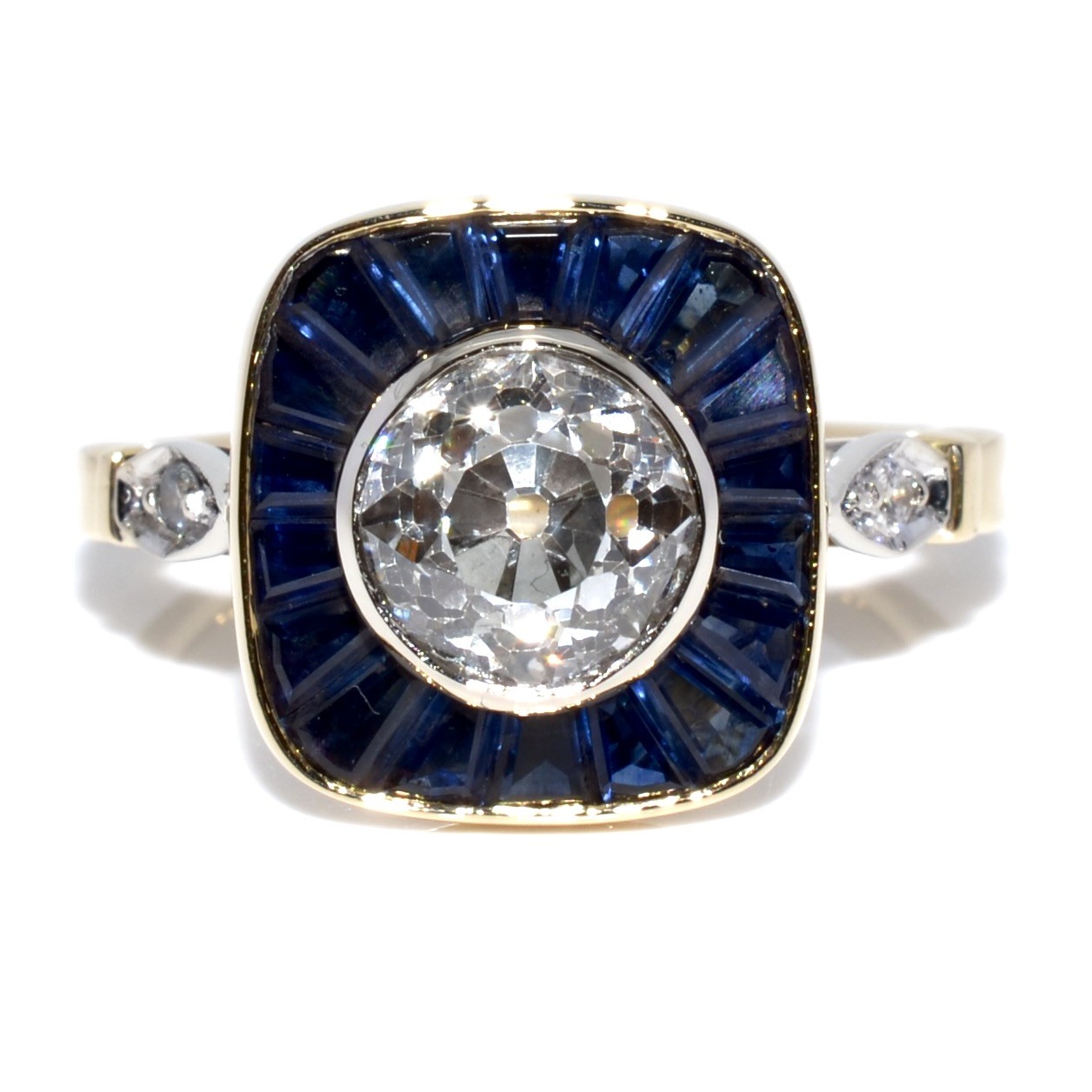
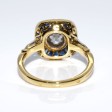
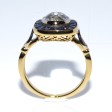
Hide pricesThis beautiful Art Deco ring, crafted in yellow gold and platinum, features a vintage-cut diamond weighing approximately 1.60 carats set at its center. It is surrounded by calibrated sapphires in a deep blue that provide a magnificent contrast to the diamond.
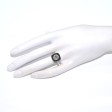
The tops of the palmette motifs are embellished with small diamonds, adding an extra touch of elegance. It sits perfectly along the length of the finger.
A piece from the 1920s.
|
Weight of the Diamond |
approx. 1,60 ct |
|---|---|
|
Valued color & clarity |
Tinted/SI |
| Weight | 5,08 g |
|---|---|
| Dimensions (Top of the ring) (cm) | 3 x 3 |
| Ring size | 54 (can be resized) |
| Ref. | #7775 |
|---|






 Pay in instalments available with Klarna or Alma.
In French jewelry of the 1920s and 1930s, calibré-cut sapphires played an essential role in Art Deco design. Individually cut to precise dimensions and shapes, these gemstones allowed jewelers to create intricate geometric patterns perfectly adapted to the architecture of each setting.
Sapphires were typically fashioned into squares, rectangles, trapezoids, or curved segments to form continuous bands, halos, and symmetrical compositions. Channel and bezel settings emphasized the clean lines of the design while minimizing the amount of visible metal. Combined with diamonds and platinum, blue sapphires created a striking color contrast that became particularly characteristic of the period.
In antique rings, calibré-cut sapphires were frequently used to surround an old-cut diamond, accentuate the shoulders, or outline intricate openwork patterns. They were also incorporated into articulated bracelets, brooches, and dress clips.
Creating these compositions required exceptional precision from the lapidary. Each sapphire had to be individually fitted into its designated position while maintaining consistent color and continuity of design. Jewelers of the period used both natural and synthetic sapphires, the latter allowing for remarkable color uniformity.