28 000 €
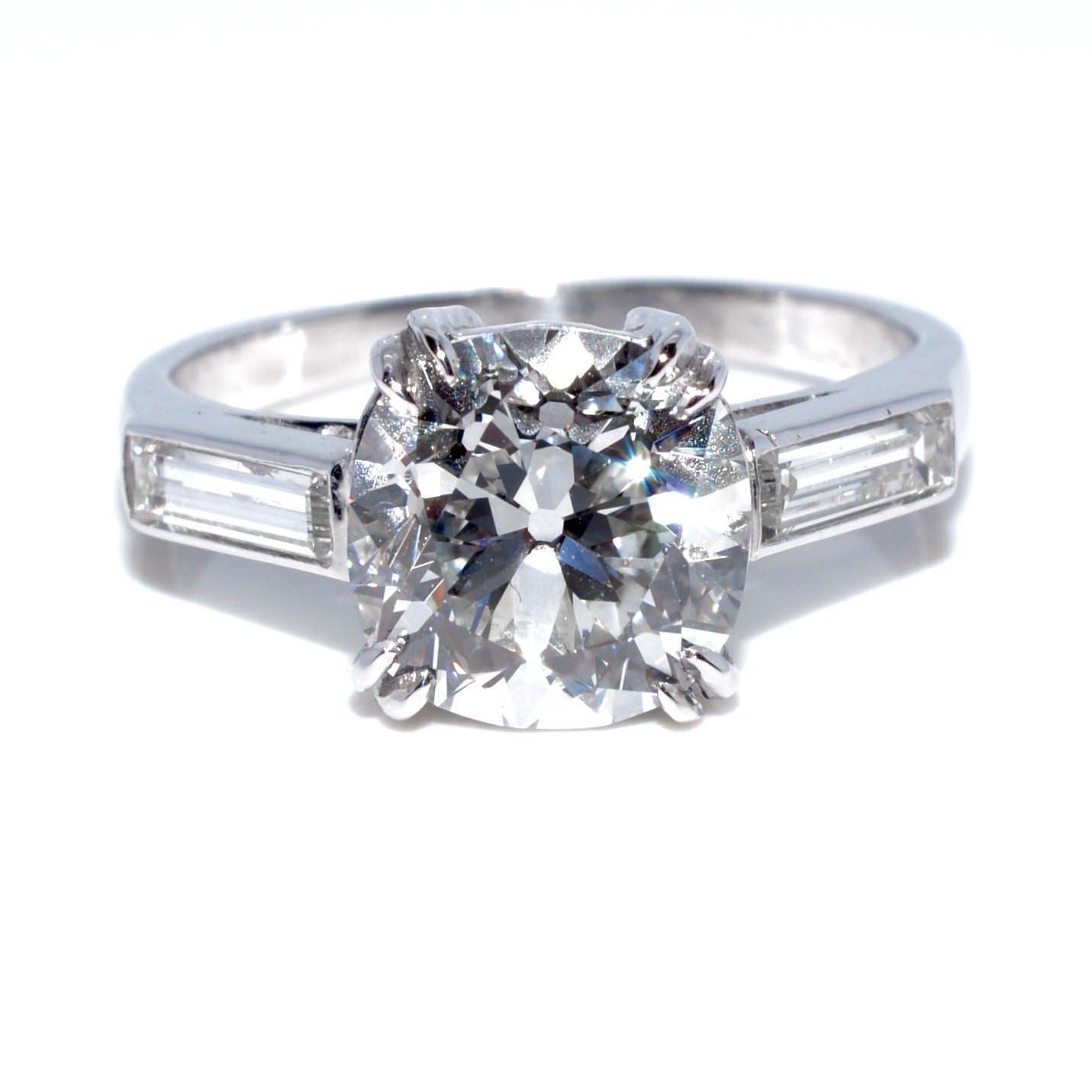
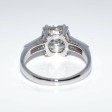
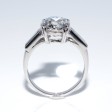
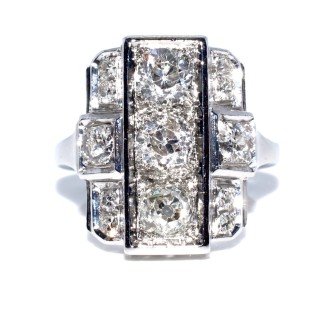
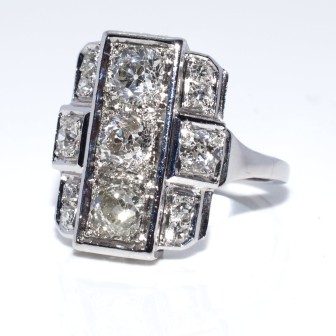
Hide pricesThis ring in 18k gold and platinum is set in its center with an old cushion-cut diamond weighing 2,37 carats. It is flanked by two long baguette-cut diamonds positioned at the top of the ring.
Certificate LFG (Laboratoire Français de Gemmologie).
Diamonds details
|
Weight of the central diamond Color & clarity Certificate Total weight of the other diamonds Valued color & clarity |
2,37 ct F/SI1 LFG approx. 0,50 ct G/VS |
|---|---|
| Weight | 4,00 g |
|---|---|
| Ring size | 50 (can be easily resized) |
| Diametre (cm) | 0,8 |
We deliver a certificate of authenticity
Please notice that our images are not photoshopped, we use a daylight environment (copyright - Heritage de France)
The jewel comes in a beautiful gift box
| Ref. | #6481 |
|---|
Old-cut cushion diamonds
Old-cut cushion diamonds refer to a category of historical cuts developed between the late nineteenth and early twentieth centuries, characterized by a gradual move toward optical optimization while retaining a distinctly handcrafted aesthetic. Their overall shape is square to slightly rectangular, with rounded corners and generally more regular proportions.
From a technical standpoint, these diamonds feature a moderately sized table, typically more open than earlier cuts, along with a small or very subtle culet. The crown remains relatively high, supporting good light dispersion, while the pavilion is cut with more controlled angles, resulting in improved light return. Facet arrangement tends toward greater symmetry, although minor variations are common due to the partially manual nature of the cutting process.
These stones display a more structured scintillation pattern, with clearer contrast between areas of light and shadow and a more evenly distributed fire. The increasing use of mechanical bruting contributed to more consistent outlines and proportions, without entirely eliminating the individuality of each stone.
Today, old-cut cushion diamonds are valued for this balance between controlled irregularity and enhanced optical performance. Their identification relies on careful analysis of proportions, facet symmetry, and light behavior, distinguishing them within the broader category of antique cushion cuts.