Art Nouveau jewellery belongs to the artistic movement that developed across Europe at the end of the 19th and beginning of the 20th century. In France, the period between approximately the 1890s and 1910 represents its most characteristic phase.
Jewellery design broke with many 19th-century conventions. Lines became freer and more asymmetric, nature became a major source of inspiration, and the artistic conception of a jewel could take precedence over the intrinsic value of its materials.
The 1900 Paris Exposition Universelle was a major event in the development and recognition of this new aesthetic. René Lalique, the house of Vever and Georges Fouquet were among the French jewellers who contributed to its influence.
Sinuous lines, asymmetric forms and nature-inspired motifs are important characteristics, but appearance alone is not sufficient to date a jewel.
Examination should also consider its construction, enamelling techniques, stone settings, soldering, fastening systems, hallmarks and signatures when present.
It is particularly important to distinguish authentic period Art Nouveau jewellery from modern Art Nouveau-style creations. An enamel dragonfly or a pendant with flowing botanical lines may be contemporary: style alone does not establish the age of a jewel.
Dating therefore requires consideration of its design, materials and manufacturing techniques as a whole.
Flowers, foliage, orchids, irises, butterflies, dragonflies, snakes and other animals were interpreted with remarkable freedom. The aim was not necessarily to reproduce nature faithfully, but rather to capture its lines, colours and movement.
The female figure was another important theme. Faces, flowing hair and silhouettes could merge with flowers, insect wings and botanical elements until they became an integral part of the composition.
The jewel thus became a miniature work of art.
One of the defining characteristics of this jewellery is the freedom with which designers combined different materials.
Gold, diamonds, opals and coloured gemstones could be used alongside enamel, glass, horn, ivory and various ornamental stones.
This represented an important departure from traditional jewellery conventions: the artistic quality of a jewel was no longer determined solely by the market value of its materials. Design, colour, transparency and craftsmanship became essential.
René Lalique particularly exemplified this approach, although it can also be found in the work of other leading French jewellers of the period.
Enamel allowed jewellers to introduce an exceptionally rich range of colours into their designs.
Several techniques were employed. Plique-à-jour, in particular, creates translucent areas of enamel without a visible metal backing, allowing light to pass through the material in a manner reminiscent of miniature stained glass.
This technique is particularly well suited to insect wings, petals and foliage, enhancing their visual lightness and variations in colour.
The condition of antique enamel should be examined carefully, as impacts and previous restorations may have affected its surface over more than a century.
Gemstones remained important, although they were not necessarily the focal point of the jewel.
Old-cut and rose-cut diamonds could bring light to a composition, while opals were particularly suited to naturalistic designs because of their distinctive play of colour.
Emeralds, rubies, sapphires, pearls and a wide range of fine and ornamental stones could also contribute to the jeweller's palette.
In many designs, the interest therefore lies less in an exceptional centre stone than in the way gemstones, metal, enamel and other materials work together as part of the overall composition.
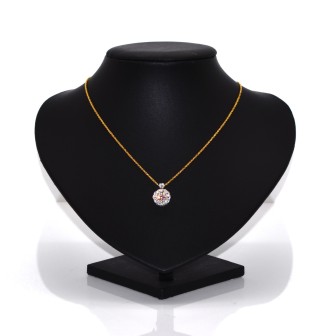
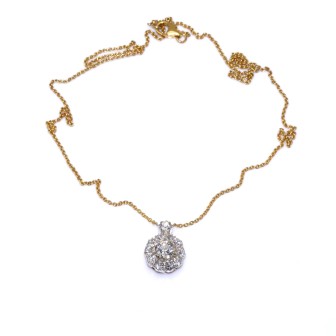
Brooches and pendants were particularly well suited to this aesthetic because their larger surfaces offered designers considerable freedom of composition.
Brooches could depict flowers, insects or female figures, while pendants allowed for vertical and sometimes articulated designs.
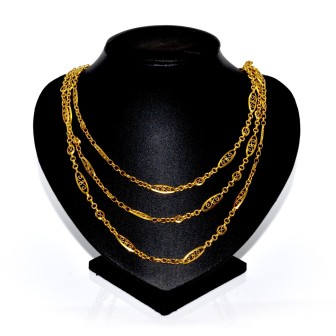
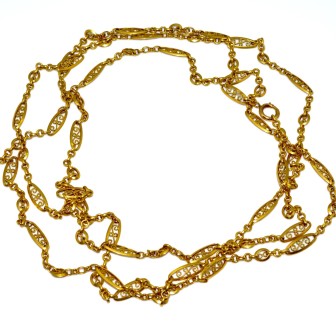
Long necklaces and sautoirs could combine chains, enamelled elements, pearls and coloured gemstones.
Period rings also exist, although some of the most spectacular and immediately recognizable examples of the movement are found among brooches, pendants and neck ornaments.
Lalique, Vever and Fouquet: Three Major Names in Art Nouveau Jewellery
René Lalique is probably the best-known figure associated with this transformation of jewellery design. He developed a highly personal vocabulary combining female figures, flora, fauna and unconventional materials. Above all, he helped establish design and composition as central elements of a jewel, independently of the intrinsic value of the gemstones used.
Henri Vever (1854–1942) played a dual role. As a jeweller working in the family firm alongside his brother Paul, he participated directly in the renewal of French jewellery, while also becoming one of its major historians. Around 1900, the house of Vever produced sophisticated jewels combining gold, enamel, ivory, coloured gemstones and pearls. Henri Vever later published La Bijouterie française au XIXe siècle, which remains an important reference for the history of French jewellery.
Georges Fouquet (1862–1957) represented another facet of this new aesthetic. He collaborated notably with the artist Alphonse Mucha and developed jewellery in which design, colour and the combination of materials played a central role. His celebrated boutique on rue Royale in Paris, designed in collaboration with Mucha, was itself a remarkable expression of Art Nouveau.
Lalique, Vever and Fouquet were not the movement's only important jewellers. Lucien Gaillard, among others, also made a significant contribution to French jewellery design during this period.
More than a century after it was created, some of this jewellery retains a remarkable freedom and modernity of design.
Asymmetry, the combination of precious and non-precious materials, references to the natural world and the importance given to creativity rather than simply to gemstone value are all principles that can still be found in contemporary jewellery.
An insect brooch, enamel pendant or antique sautoir can therefore be worn today as a strong piece of jewellery without necessarily appearing like a historical object.
This modernity also helps explain why the aesthetics of the period continue to inspire contemporary designers.
These jewels are now more than a century old, making their state of preservation particularly important.
Stone settings, soldering, clasps and articulated elements should be carefully inspected, as should the condition of enamel, glass, horn and other fragile materials when present.
Previous restorations should also be identified. An intervention on an antique jewel is not necessarily problematic, but it should respect, as far as possible, the original materials, techniques and character of the piece.
Hallmarks and signatures are also particularly important when present.
At Héritage de France®, of course!
we offer in Paris a selection of authentic period jewellery, including pieces dating from the late 19th and early 20th centuries.
Our collection includes rings, earrings, pendants, lockets, sautoirs, necklaces, bracelets and brooches, selected for their design, materials, quality of craftsmanship and state of preservation.
Before being offered for sale, each jewel is examined to assess its gemstones, precious metals, settings and fastening systems, as well as hallmarks and signatures when present. Any necessary restoration may then be entrusted to our workshop.
The distinction remains essential: an authentic Art Nouveau jewel is a piece actually made during the historical period; a modern Art Nouveau-style jewel is a later creation inspired by its aesthetic vocabulary.
Résultats 49 à 63 sur 63