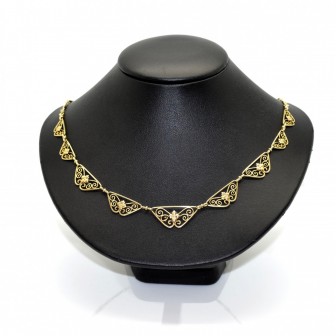
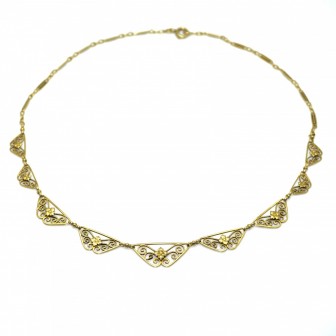
2 750 €
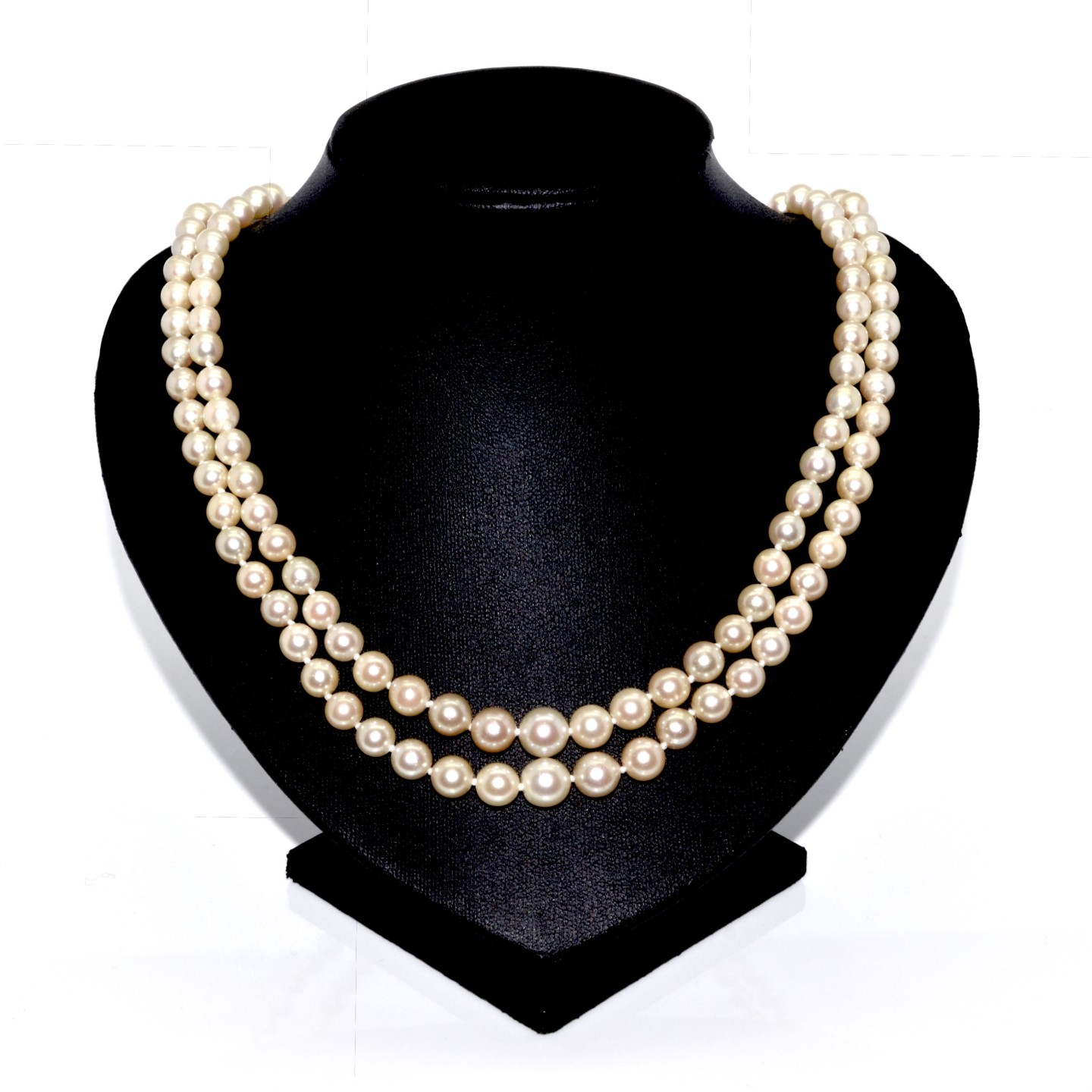
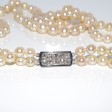
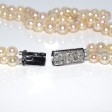
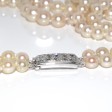
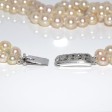
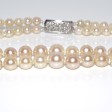
Hide pricesThis beautiful 49cm vintage necklace features a double strand of cultured pearls (ranging from 4 mm to 8,8 mm) in a beautiful cream color. The platinum and 18K white gold clasp is set with old cut diamonds.
The necklace sits perfectly and is very elegant.
|
Total weight of the diamonds Valued color & clarity Weight of the necklace |
approx. 1,20 ct G-H/VS-SI 58,40 g |
|---|---|
| Length (cm) | 49 |
We deliver a certificate of authenticity
Please notice that our images are not photoshopped, we use a daylight environment (copyright - Heritage de France)
The jewel comes in a beautiful gift box
| Ref. | #7683 |
|---|






 Pay in instalments available with Klarna or Alma.
In 1920s France, the introduction of Japanese cultured pearls marked a major turning point in the history of fine jewelry. Previously dominated by natural pearls, whose rarity commanded exceptionally high prices, the pearl market underwent a profound transformation. Advances in pearl cultivation made it possible to produce pearls with remarkably regular shapes, exceptional luster, and delicate shades of white, cream, and pink.
In Paris, pearl necklaces became an essential element of women's fashion during the Roaring Twenties. Long sautoirs, sometimes worn in multiple strands, complemented the straight, flowing silhouettes of contemporary dresses. Shorter necklaces, featuring either uniformly sized or graduated pearls, also enjoyed considerable popularity.
French jewelers devoted particular attention to the design and craftsmanship of necklace clasps. Exquisite pieces of jewelry in their own right, these clasps were frequently crafted in platinum or white gold and set with old-cut diamonds, rose-cut diamonds, and occasionally calibré-cut sapphires. Their geometric compositions, delicate openwork, and refined craftsmanship embodied the distinctive aesthetic of the Art Deco period.
The quality of these antique pearl necklaces is determined by several factors, including nacre thickness, intensity of luster, surface quality, and consistency of color. Today, cultured pearl necklaces from the 1920s that retain their original clasps remain valuable examples of French jewelry craftsmanship from this remarkable period.