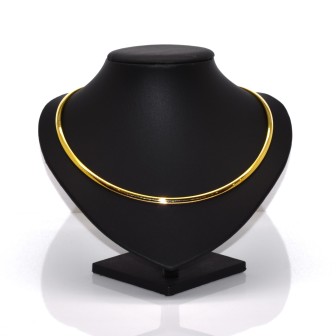
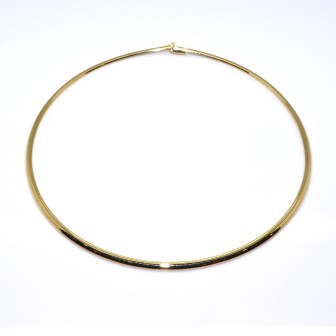
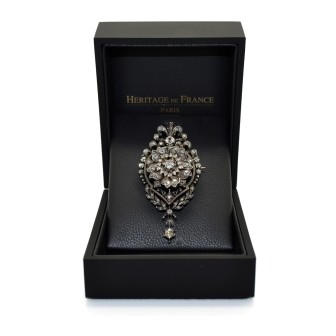
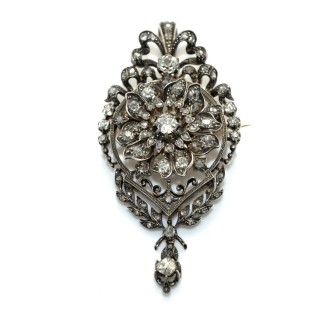
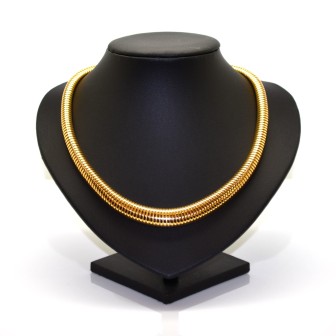
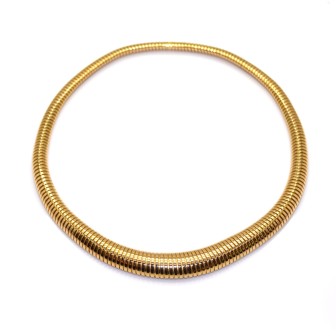
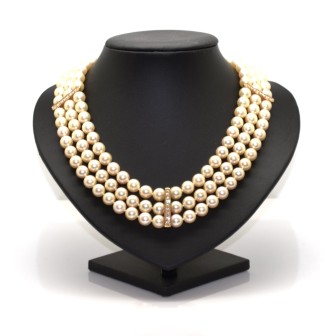
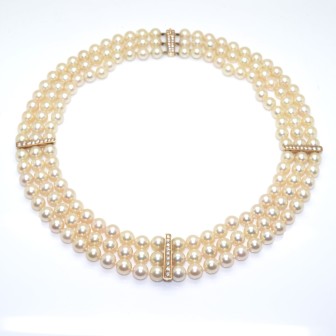
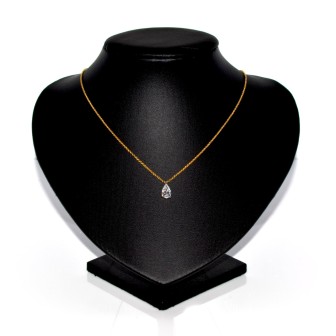
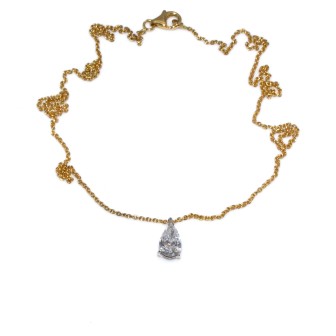
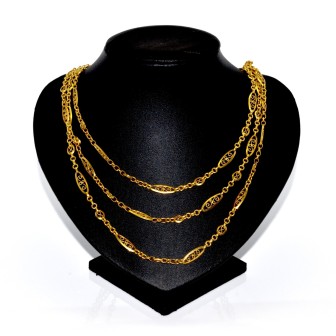
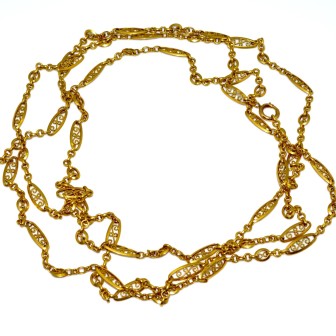
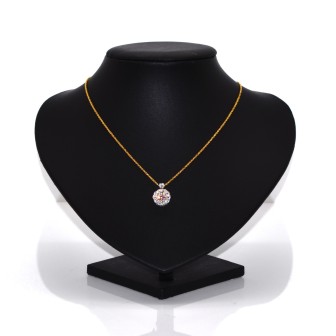
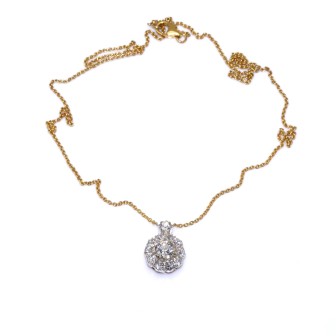
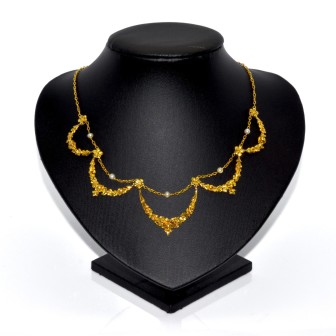
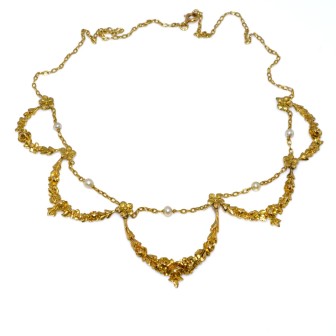
Antique necklaces and pendants display a wide variety of forms and techniques, from the second half of the 19th century through the 1940s. Drapery necklaces, sautoirs, lockets, photo pendants, négligé necklaces, and pendants set with diamonds and precious gemstones reflect the evolution of jewelry design and the styles associated with each period.
Crafted in gold, silver, or platinum, these pieces may combine metalwork with diamonds, pearls, sapphires, rubies, or emeralds. Their construction, articulated elements, chains, and fastening systems are integral parts of their design.
At Héritage de France®, we select antique necklaces and pendants for their quality of craftsmanship, condition, and jewelry interest.
During the second half of the 19th century, necklaces and pendants took many different forms. Gold could be engraved, chased, or enameled and combined with diamonds, pearls, or colored gemstones.
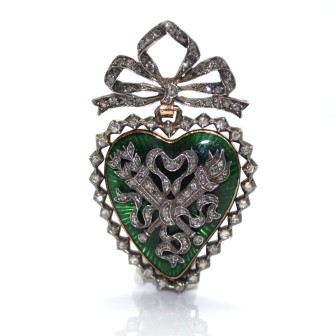
Lockets and photo pendants held a particular place in the jewelry of this period. Designed to hold a portrait or keepsake, they may feature elaborate decoration on the exterior and sometimes incorporate enamel or gemstones.
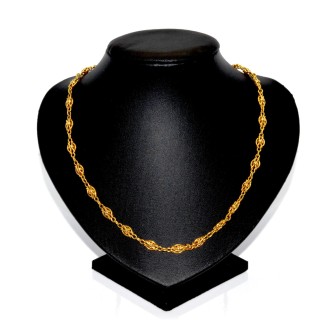
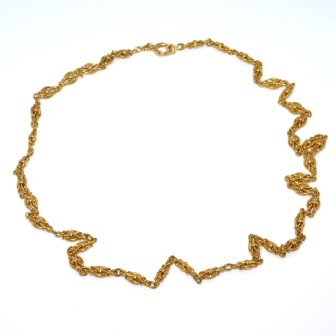
Drapery necklaces and sautoirs allowed for more elaborate compositions combining chains, articulated motifs, and suspended elements.
In the late 19th and early 20th centuries, some jewelry designs became lighter and placed greater emphasis on diamonds and openwork motifs.
Pendants could feature articulated or suspended elements designed to move naturally when worn. Négligé necklaces, characterized by two pendant elements often suspended at different lengths, are particularly associated with this period.
Pearls and diamonds could also be combined in compositions designed to create a lighter appearance.
During the 1920s and 1930s, geometry became increasingly important in jewelry design. Art Deco pendants could combine platinum, diamonds, and colored gemstones in highly structured compositions.
Diamonds of different shapes and cuts became integral elements of the design. Sapphires, rubies, emeralds, and onyx could be used to create color contrasts and emphasize the geometry of the piece.
Sautoirs and long necklaces also played an important role in the fashion of this period.
Antique necklaces and pendants may be set with diamonds, sapphires, rubies, or emeralds, as well as feature pearls.
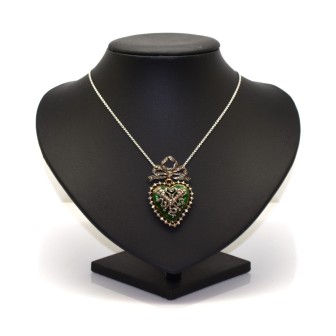
The center stone of a pendant may be the main focus of the piece or form part of a more complex composition. Its cut, proportions, and setting should be considered in relation to the mounting and the period of the jewelry.
For important gemstones, a report issued by an independent gemological laboratory may provide additional information about their nature, characteristics, and, when possible, certain treatments.
Attributing a period to an antique necklace or pendant requires consideration of a combination of consistent characteristics. The style of the piece is examined together with its construction, manufacturing and stone-setting techniques, the metals used, chains and fastening systems, and any hallmarks or signatures that may be present.
The characteristics of the diamonds and other gemstones may provide additional information, but they cannot by themselves establish the date of a piece of jewelry.
Antique, Vintage, and Pre-Owned Necklaces and Pendants
At Héritage de France®, we distinguish antique necklaces and pendants, primarily made between the second half of the 19th century and the 1940s, from vintage jewelry, mainly corresponding to pieces created from the 1950s through the 1980s.
The term pre-owned jewelry does not refer to a specific period. It simply indicates that a piece has previously been owned. An antique, vintage, or more recent necklace or pendant can therefore be pre-owned.
Héritage de France® presents a regularly updated selection of antique necklaces and pendants at our jewelry store in Paris, located at the entrance to the Village Suisse: 19th-century lockets and photo pendants, drapery necklaces, sautoirs, Belle Époque and Art Deco pendants, pearl necklaces, and jewelry set with diamonds and precious gemstones.
All of our jewelry is inspected before being offered for sale. With antique necklaces and pendants, particular attention is paid to clasps, chains, connecting rings, articulated elements, and suspension systems, as well as the security of diamond and gemstone settings, to ensure that the jewelry can be worn safely and comfortably.
Our store is open to the public, and you are welcome to visit and try on our antique necklaces and pendants without an appointment.
Résultats 49 à 58 sur 58