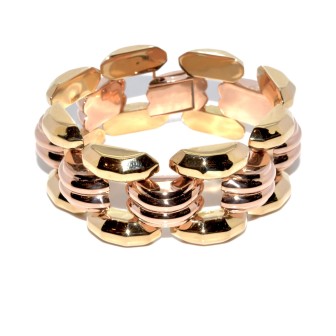
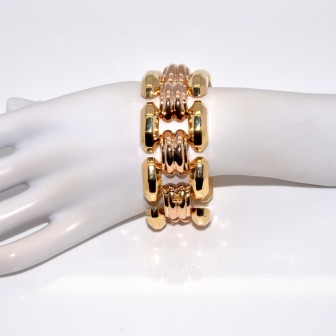
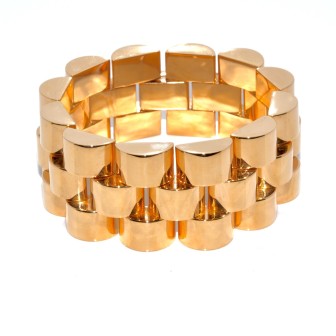
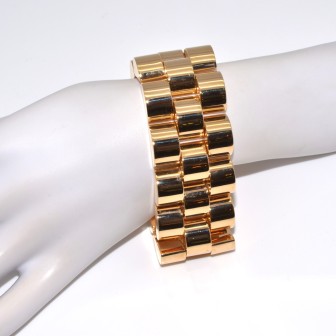
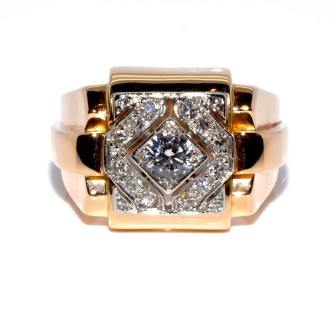
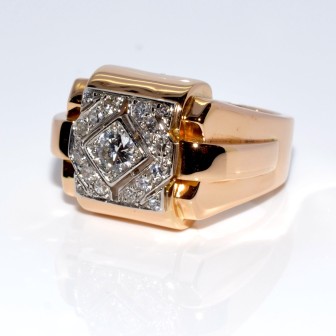
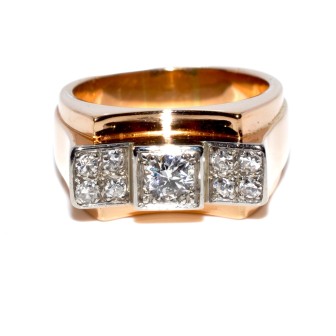
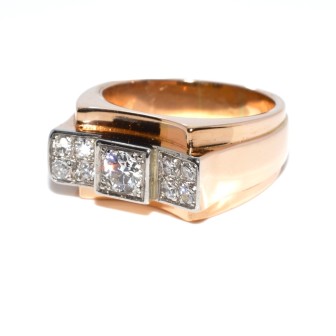
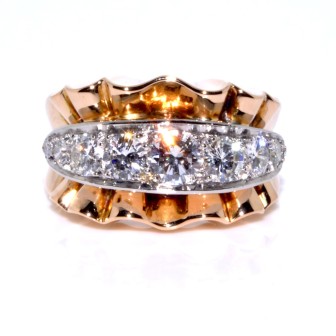
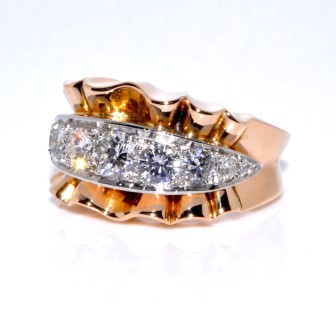
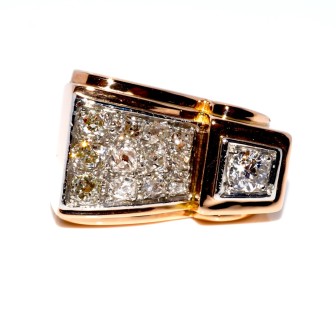
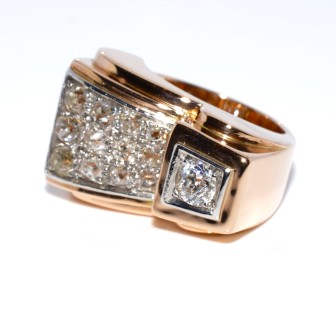
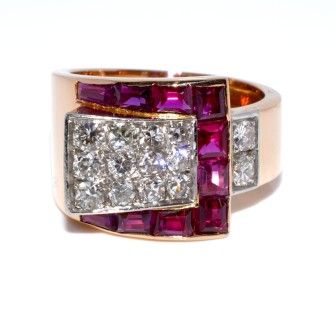
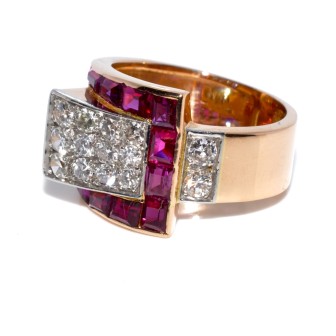
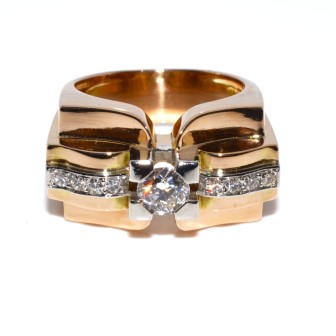
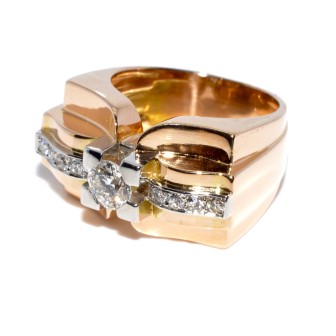
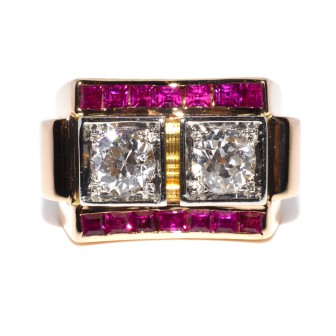
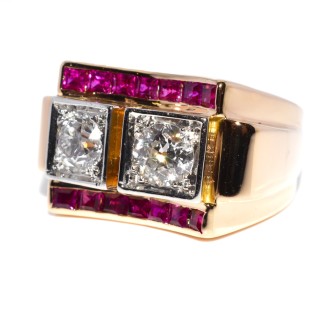
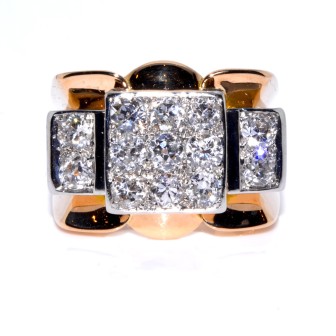
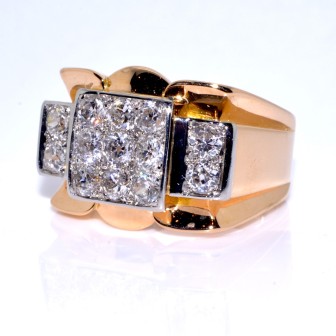
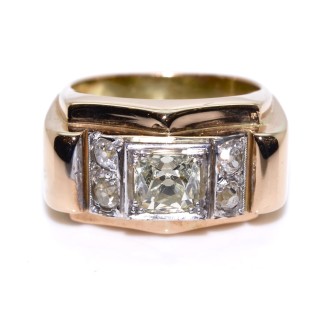
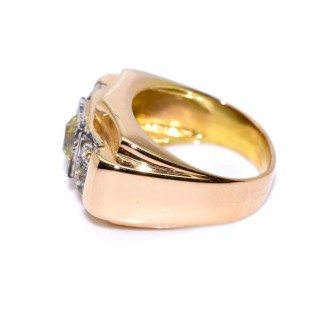
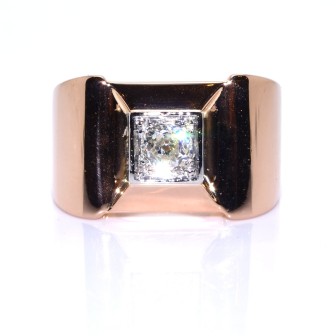
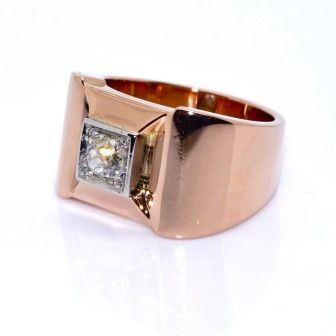
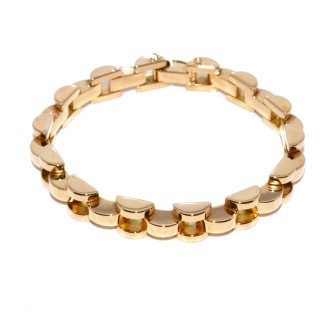
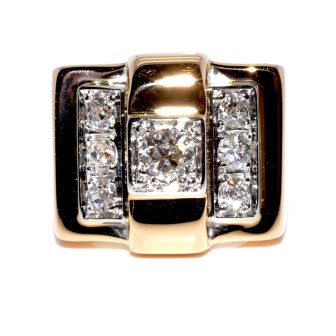
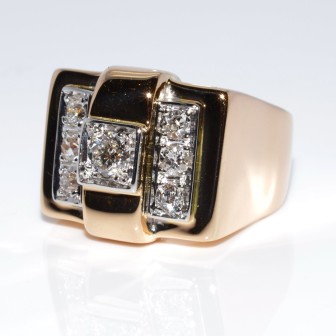
Tank jewellery refers to a distinctive style particularly associated with the 1940s, recognizable by its bold volumes, geometric lines and powerful construction.
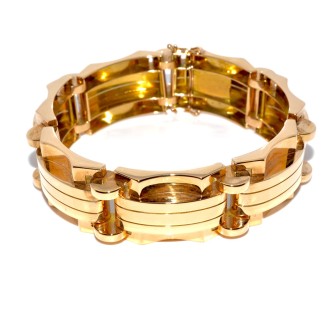
Rings and bracelets are among the most emblematic pieces. Their designs often feature architectural forms such as scrolls, gadroons, interlocking links, rectangular motifs and cylindrical elements.
The style continues some of the geometric principles of Art Deco, but develops them in a different direction. Settings become more substantial, and gold itself plays a much greater role in the overall design.
A bold or geometric appearance alone is not sufficient to identify an original Tank jewel.
Examination should include the construction of the setting, articulated elements, stone settings, soldering, hallmarks and manufacturing techniques. The proportions and the way in which the different volumes are assembled can also provide useful indications.
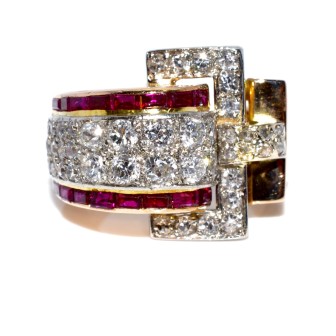
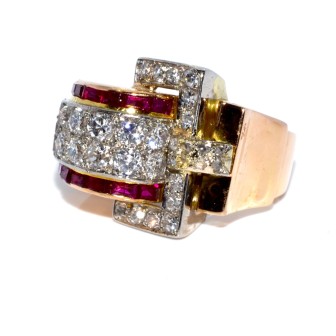
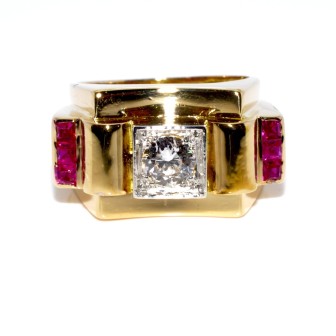
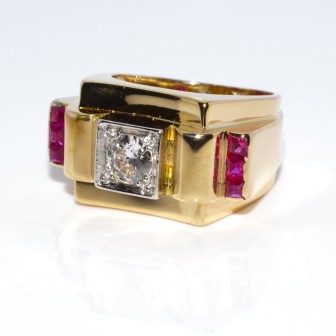
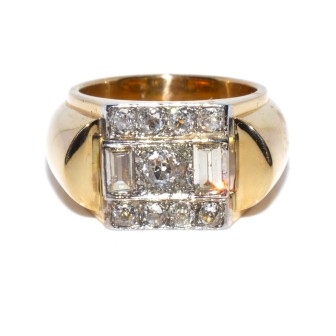
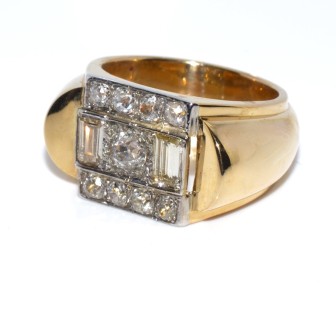
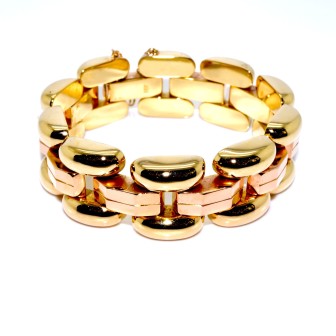
Rings may feature substantial areas of gold, asymmetric or architectural constructions and diamonds set in platinum. Bracelets often consist of a succession of broad articulated links, combining visual weight with flexibility.
It is also important to distinguish authentic Tank jewellery made during the 1940s from contemporary creations inspired by this aesthetic.
18k gold is one of the defining materials of the period.
Yellow gold is particularly common, while rose gold also plays an important role. Both colours may be combined within the same jewel to emphasize volumes and create contrasts between different elements.
The metal itself becomes an essential part of the design. Unlike some earlier jewellery, where a fine platinum setting could almost disappear behind the diamonds, pieces from the 1940s often emphasize the volume, colour and workmanship of the gold.
Some rings nevertheless combine gold with platinum, particularly for diamond-set sections.
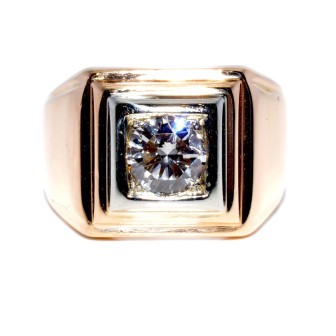
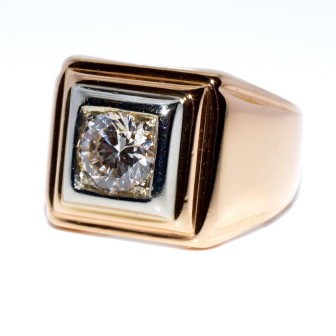
Tank rings are characterized by their assertive volumes. Some feature a significant central diamond, while others incorporate several old-cut or single-cut diamonds into a geometric composition.
Settings may be symmetrical or deliberately asymmetric. Yellow and rose gold can also be combined with platinum to create contrasts between the different parts of the design.
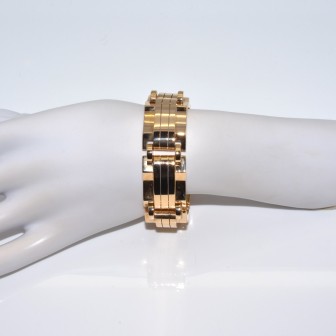
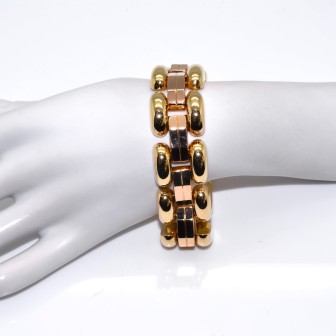
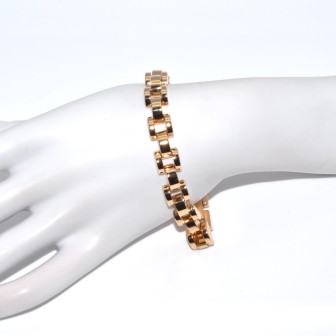
Tank bracelets are another particularly characteristic expression of the period. Generally broad and relatively heavy, they are composed of articulated links that may resemble scrolls, cylinders or interlocking mechanical elements.
Despite their substantial appearance, finely made Tank bracelets can remain remarkably supple thanks to the precision of their articulations.
Diamonds occupy an important place in Tank jewellery, although they do not necessarily dominate the composition as they often did in earlier Art Deco pieces.
They may be incorporated into substantial gold settings, particularly as old-cut or single-cut diamonds.
Rubies are also characteristic of some designs and may be combined with diamonds to create strong colour contrasts. Period pieces may also feature synthetic rubies produced using the Verneuil process. Their presence can be historically consistent and should not automatically be interpreted as evidence of a later alteration.
One of the most interesting characteristics of these pieces is their enduring modernity: more than eighty years after they were made, many Tank jewels still have a strikingly contemporary appearance.
Their generous volumes, polished gold surfaces, broad links and almost industrial geometry correspond closely to today's taste for bold jewellery.
A wide gold bracelet can be worn alone on a bare wrist, while a substantial ring can function as a true statement piece. Combined with simple contemporary clothing, these jewels can look remarkably current despite their age.
This modernity also explains why their forms continue to influence contemporary jewellery design.
Condition is particularly important when assessing these pieces.
On a ring, the shank, stone settings, gemstones and any previous alterations should be examined. On a bracelet, particular attention should be paid to the articulations, clasp and safety mechanisms.
Weight alone is not an indication of quality, even though these jewels often contain substantial quantities of gold. Precision of manufacture, proportions, flexibility of the articulated elements and the overall coherence of the design are equally important.
Hallmarks and signatures should also be examined when present.
At Héritage de France®, of course! We offer in Paris a selection of authentic period Tank jewellery, primarily dating from the 1940s.
Our collection includes Tank rings and bracelets in 18k yellow or rose gold, sometimes combined with platinum, diamonds and coloured gemstones.
Before being offered for sale, each jewel is examined to assess its precious metals, gemstones, settings and articulated elements, as well as hallmarks and signatures when present. Any necessary restoration may then be entrusted to our workshop.
A genuine Tank jewel is therefore not defined simply by its bold appearance: it is a period piece whose construction, materials and proportions reflect the jewellery design of the 1940s.
Résultats 1 à 20 sur 20