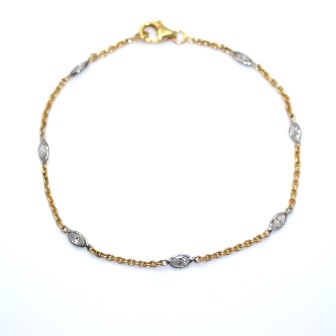
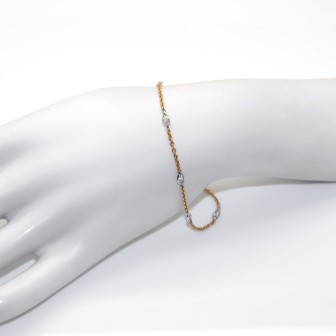
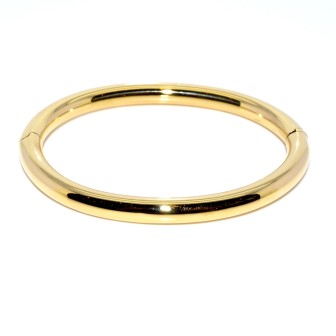
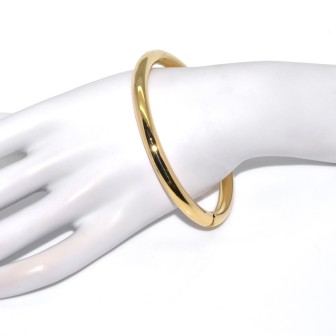
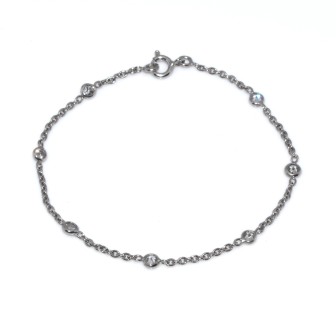
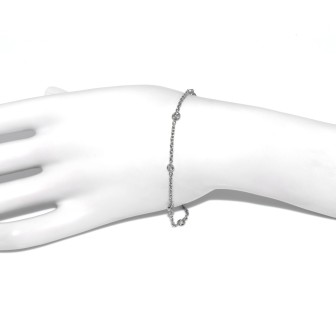
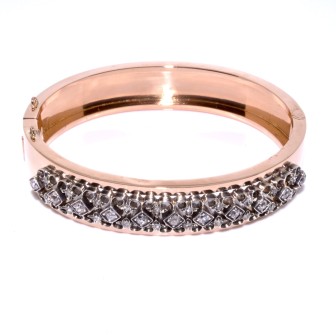
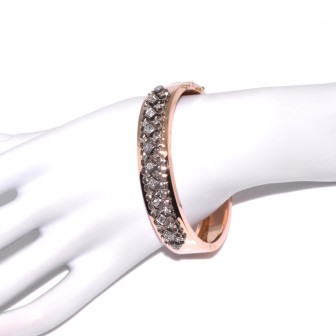
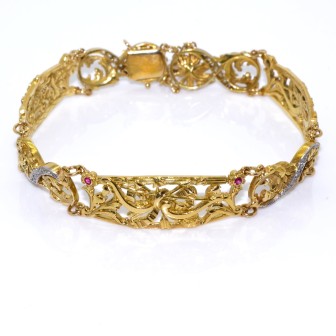
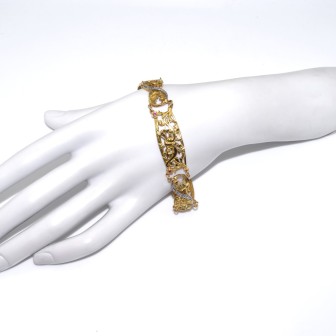
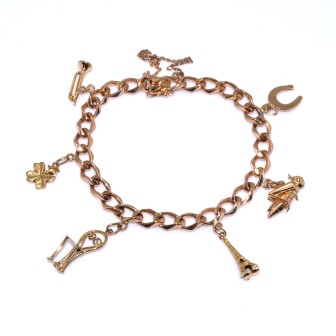
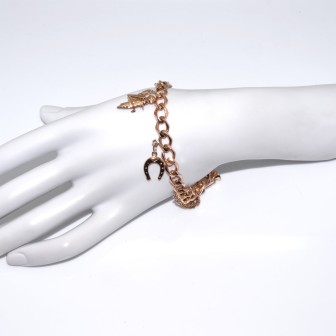
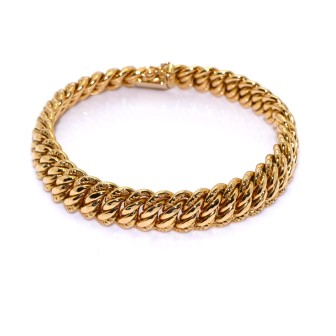
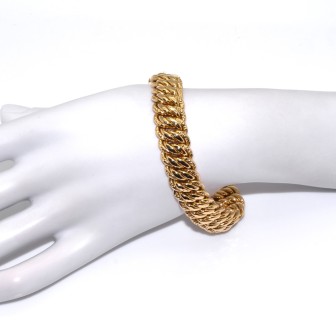
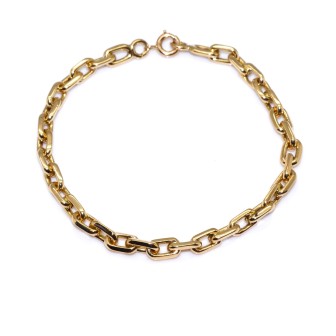
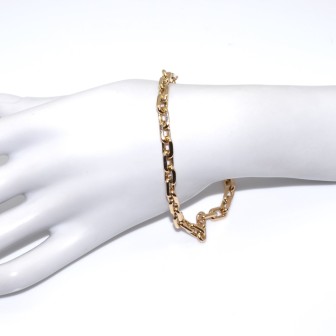
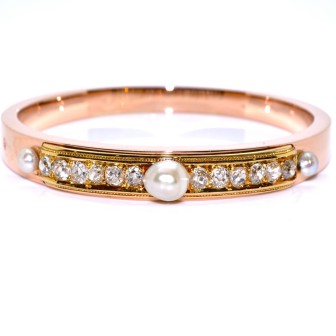
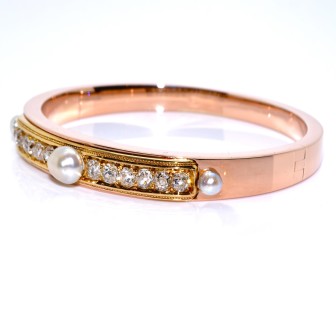
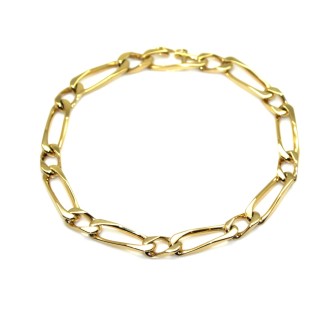
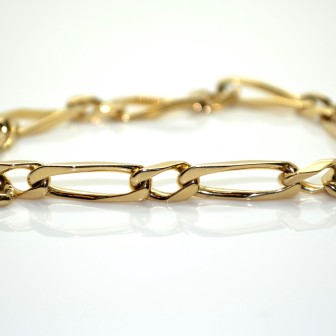
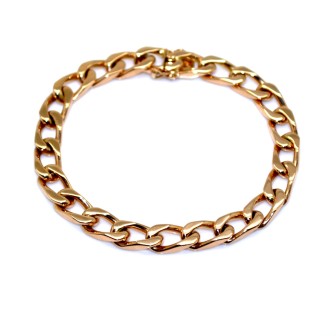
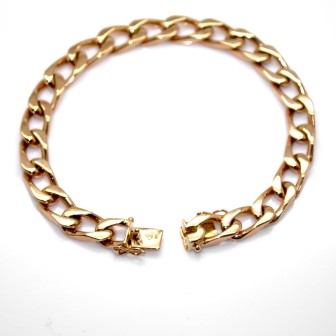
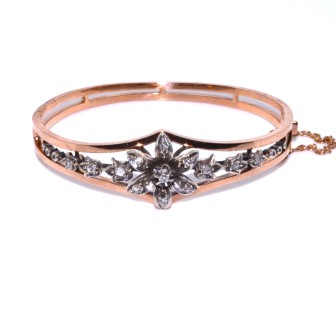
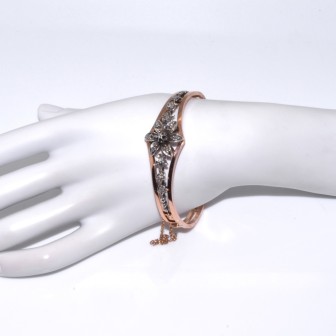
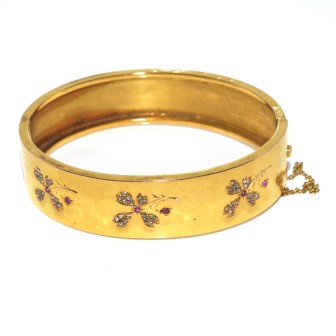
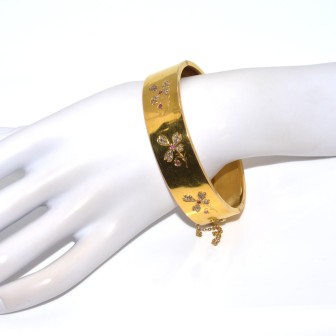
Bracelets held an important place in French jewelry from the second half of the 19th century through the first half of the 20th century. Their form and construction evolved with changing styles and techniques: rigid or articulated bracelets during the Second Empire, lighter designs around the turn of the century, geometric Art Deco compositions, and wide gold bracelets of the 1940s.
These pieces may be crafted in yellow, rose, or white gold, as well as platinum, and set with diamonds, pearls, or colored gemstones. Beyond their decorative elements, construction is an essential characteristic of an antique bracelet: hinges, links, articulations, and clasps are integral to its design.
At Héritage de France®, we select antique bracelets for their quality of craftsmanship, condition, and jewelry interest.
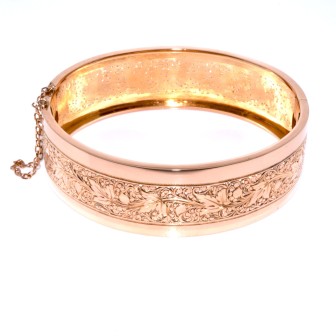
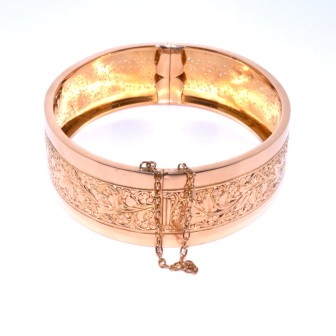
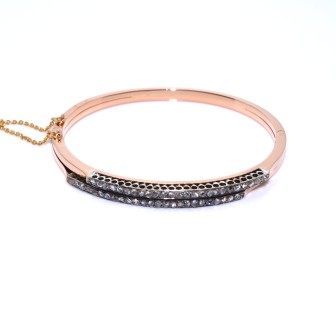
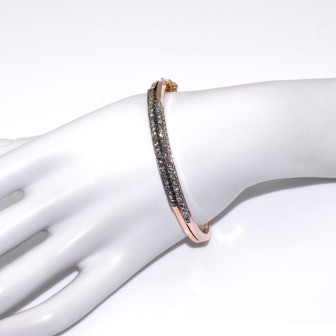
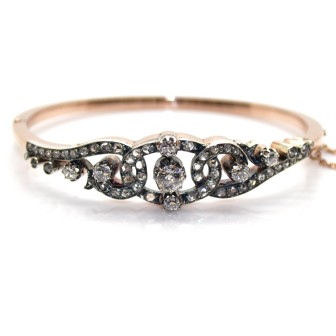
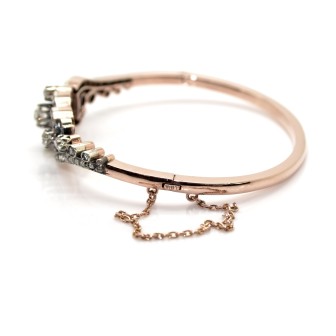
During the second half of the 19th century, bracelets could take the form of rigid bangles or articulated designs, often crafted in yellow or rose gold. Decorative work played an important role: engraving, chasing, enamel, and naturalistic or geometric motifs could be combined with diamonds, pearls, or colored gemstones.
Some bracelets were conceived as elaborate jewelry compositions, while others placed greater emphasis on the craftsmanship of the metal itself. Clasps and hinges were generally integrated into the structure of the piece and are important elements of its construction.
During the 1920s and 1930s, bracelets adopted more geometric lines and often highly articulated constructions. Platinum and diamonds played a prominent role in the jewelry of this period, sometimes combined with sapphires, rubies, emeralds, or onyx.
Some designs consist of a succession of articulated elements that allow the bracelet to conform to the wrist. Diamonds in different shapes and cuts may be incorporated into the composition to emphasize the geometry of the design.
The quality of the articulations, settings, and clasp is particularly important in these bracelets, whose flexibility is an integral part of their design.
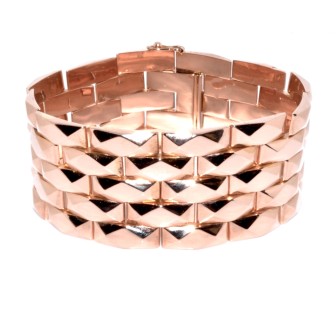
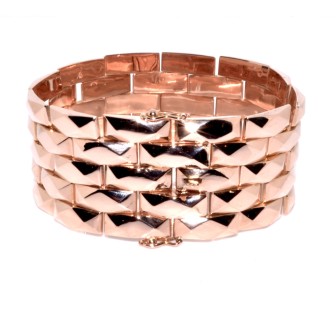
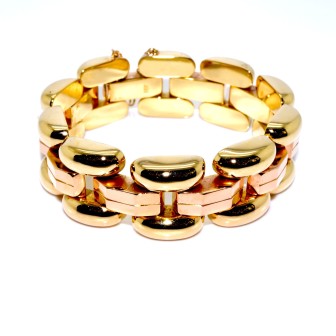
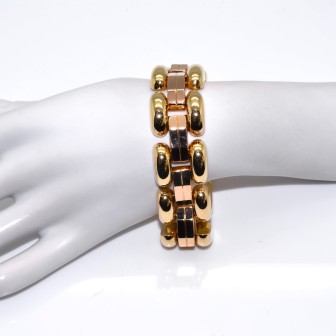
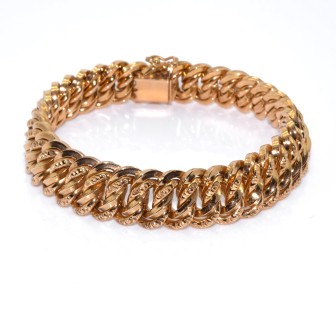
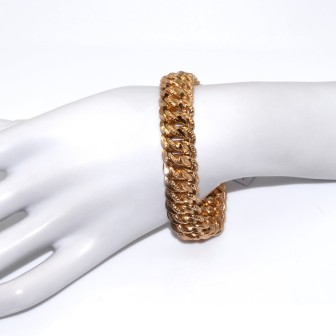
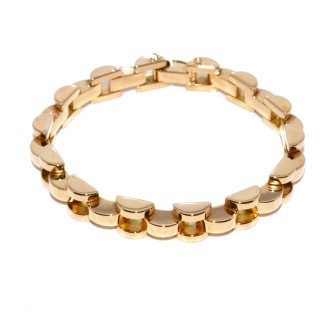
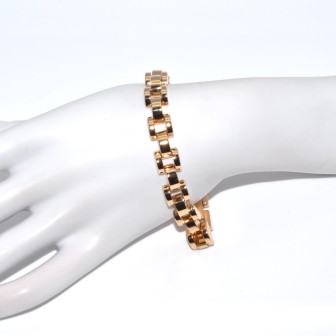
The 1940s saw the development of bracelets with greater volume. Tank bracelets are particularly recognizable for their wide links, articulated construction, and prominent use of yellow or rose gold.
Gold itself became a major element of the design. Some bracelets were made entirely of gold, while others were accented with diamonds or precious gemstones.
Despite their substantial appearance, Tank bracelets often rely on articulated link constructions that allow them to retain flexibility on the wrist.
Attributing a period to an antique bracelet requires consideration of a combination of consistent characteristics. Its style and proportions are examined together with its construction, manufacturing and stone-setting techniques, articulation and clasp systems, as well as any hallmarks or signatures that may be present.
The metals used, the way they were worked, and the characteristics of the gemstones may provide additional information. However, none of these elements should be considered in isolation when dating a piece of jewelry.
Examination can also reveal alterations and restorations made during the history of the bracelet and help distinguish, whenever possible, original components from later interventions.
At Héritage de France®, we distinguish antique bracelets, primarily made between the second half of the 19th century and the 1940s, from vintage bracelets, which mainly correspond to pieces created from the 1950s through the 1980s.
The term pre-owned jewelry does not refer to a specific period. It simply indicates that a piece has previously been owned. An antique or vintage bracelet is therefore generally also pre-owned, just as a much more recent bracelet can be.
This distinction allows the period and nature of each piece to be described more accurately.
Héritage de France® presents a regularly updated selection of antique bracelets at our jewelry store in Paris, located at the entrance to the Village Suisse: Napoleon III bracelets, Art Deco designs, Tank bracelets, gold bracelets, and pieces set with diamonds or precious gemstones.
All of our jewelry is inspected before being offered for sale. With antique bracelets, particular attention is paid to the condition of the mounting, clasps, hinges, and articulations, as well as the security of the gemstone settings, to ensure that the pieces can be worn safely and comfortably.
Our store is open to the public, and you are welcome to visit and try on our antique bracelets without an appointment.
Résultats 25 à 46 sur 46