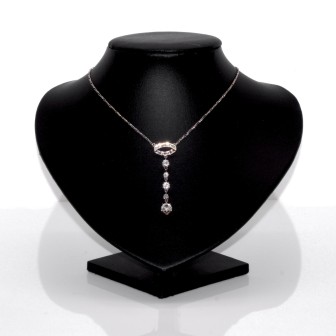
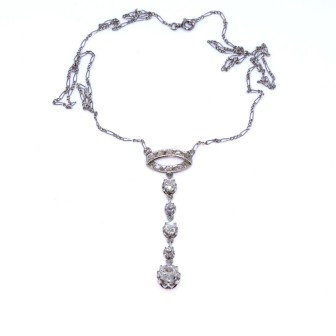
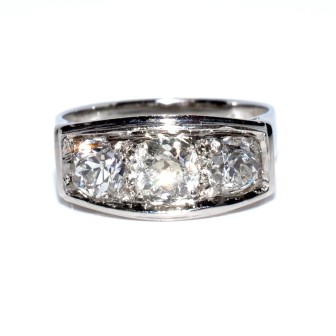
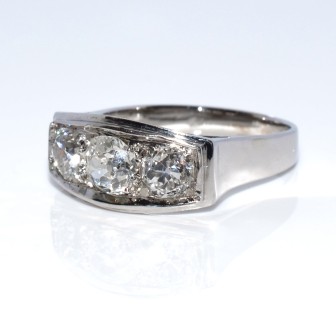
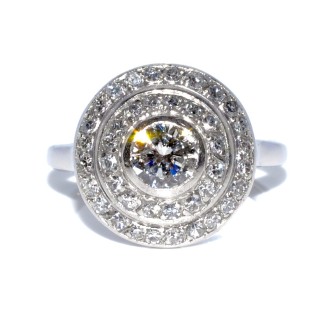
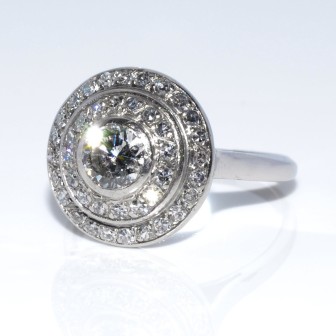
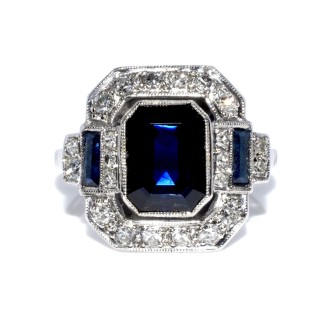
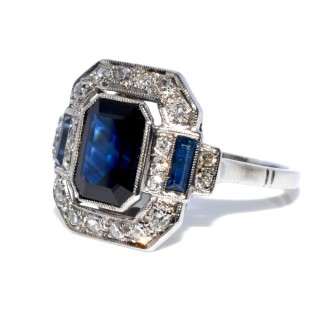
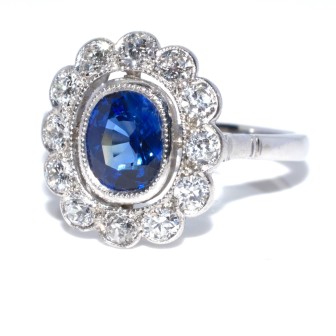
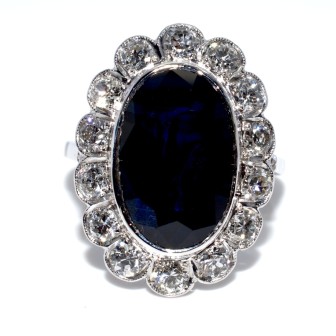
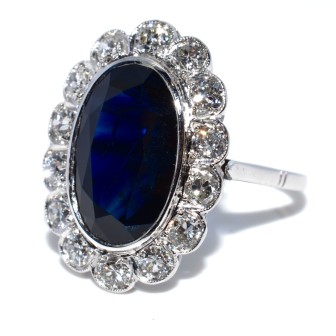
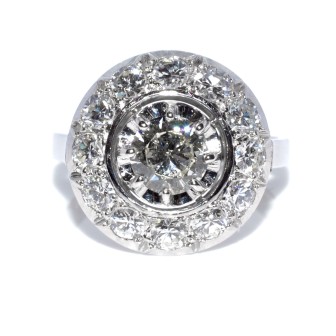
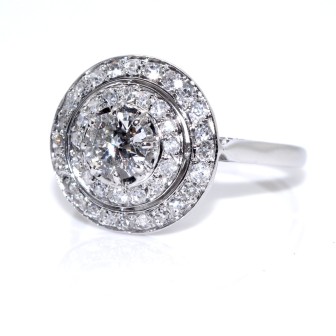
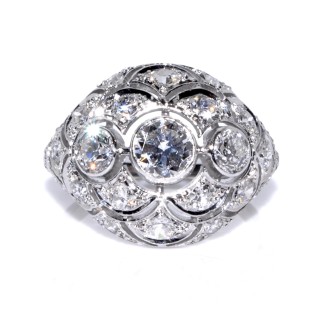
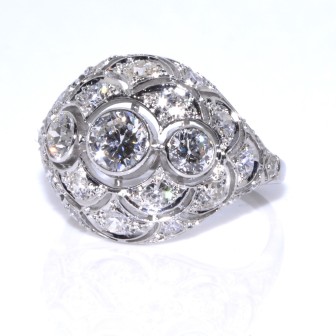
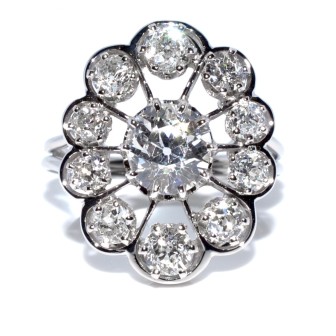
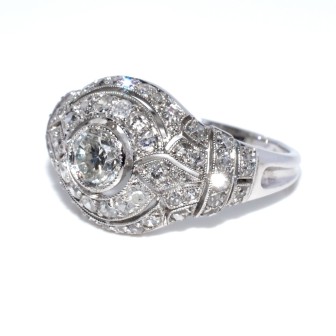
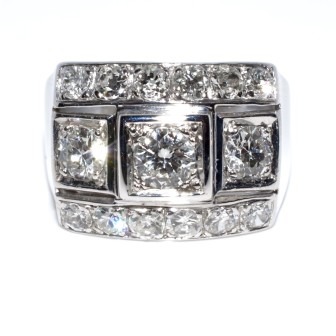
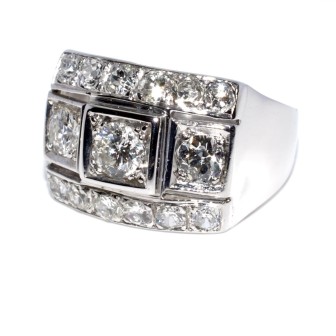
In historical terms, Art Deco jewellery refers to pieces made during the period itself, primarily in the 1920s and 1930s. In France, the Exposition Internationale des Arts Décoratifs et Industriels Modernes, held in Paris in 1925, marked a major moment in the development and recognition of this new aesthetic.
Jewellery from this period favours geometric lines, symmetry and architectural compositions. Circles, rectangles, straight lines and repeating patterns contrast with the curves and naturalistic influences associated with much of Art Nouveau.
It is particularly important to distinguish period Art Deco jewellery from modern Art Deco-style jewellery. The former was actually made during the historical period, while the latter is a more recent creation inspired by its aesthetic codes.
A contemporary jewel can perfectly reproduce the geometry, materials and combinations of gemstones associated with the 1920s and 1930s. It may be an exceptionally fine piece, but this does not make it a period jewel.
Terms such as “Art Deco style,” “Art Deco inspired” or Art Deco revival more accurately describe these later creations.
By contrast, a ring, bracelet or brooch made during the historical period directly reflects the manufacturing techniques, gemstone cuts and jewellery craftsmanship of its time.
At Héritage de France®, the antique jewels we present are selected as authentic period pieces, rather than modern reproductions of the style.
Geometric design alone is not sufficient to date a jewel. Many contemporary pieces accurately reproduce the aesthetics of the 1920s and 1930s.
An examination therefore considers the construction of the setting, stone-setting techniques, soldering, openwork, gemstones, hallmarks and any signatures.
Diamonds can also provide useful indications. Period pieces may feature old-cut diamonds, as well as baguettes and various step cuts that form an integral part of the geometric design.
All these characteristics must be considered together: a hallmark, an old-cut diamond or a platinum setting is not, on its own, sufficient to date a jewel accurately.
Platinum occupies an important place in jewellery from this period. Its mechanical properties allow jewellers to create fine, openwork structures capable of securely holding numerous gemstones while retaining visual lightness.
Its naturally white colour is particularly well suited to diamonds and contributes to the bright appearance of the settings.
Platinum may be used alone or combined with 18k gold. This combination can be found in French jewellery where certain parts are made of gold while the diamonds are set in platinum.
Diamonds, Sapphires, Emeralds, Rubies and Onyx
Diamonds play a central role in jewellery from the 1920s and 1930s, but colour was also widely used.
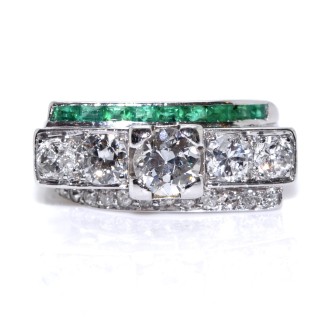
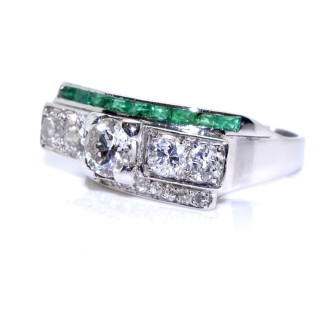
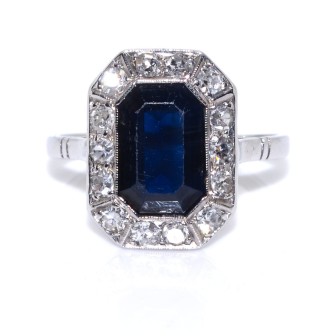
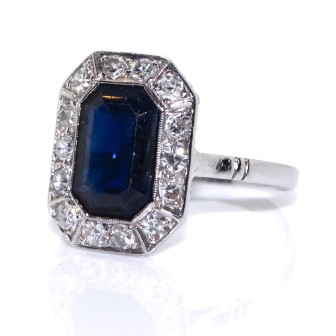
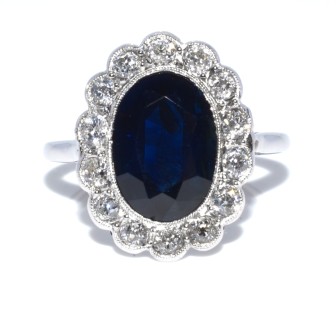
Sapphires, rubies and emeralds may appear as principal gemstones or be cut into small calibrated elements that emphasize the geometry of a jewel.
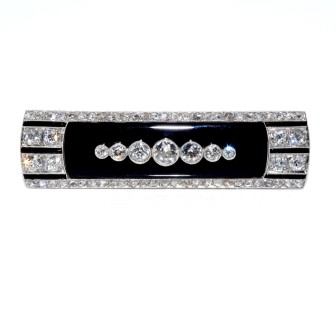
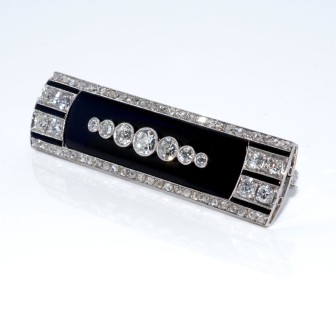
Onyx is particularly striking when combined with diamonds. The black-and-white contrast creates the strong graphic compositions associated with some of the most characteristic designs of the period.
More than the individual value of each gemstone, their combination, cut and arrangement are integral to the overall design.
This aesthetic can be found across virtually every category of fine jewellery.
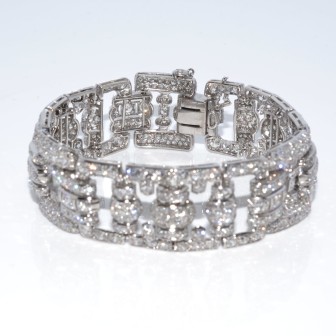
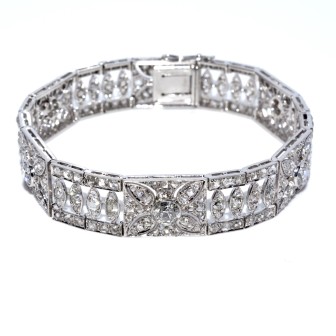
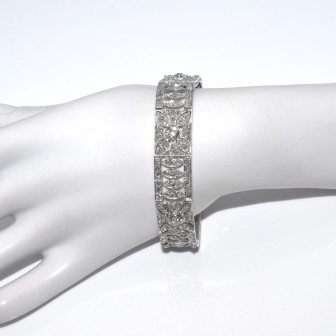
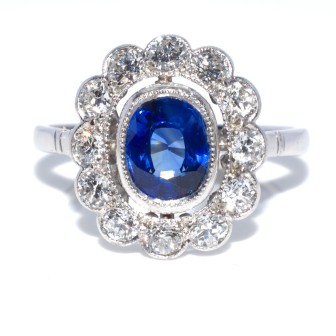
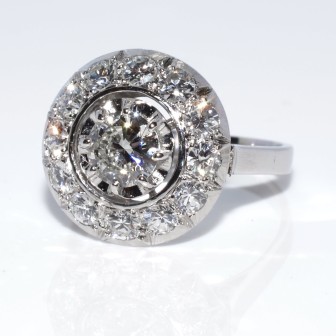
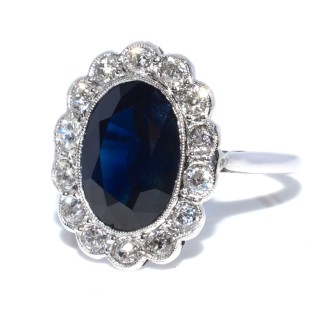
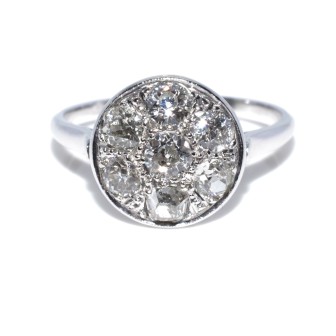
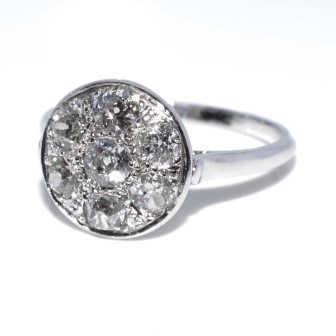
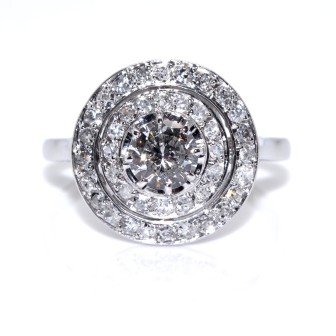
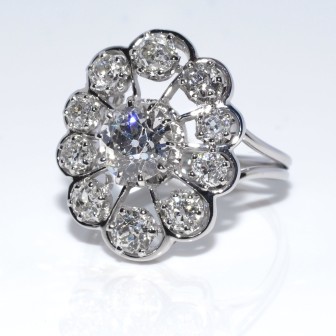
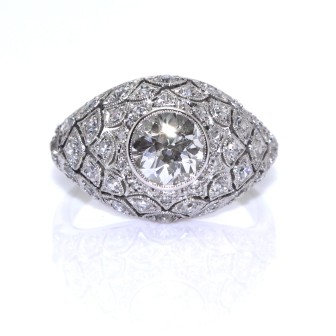
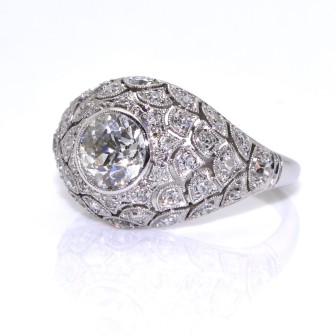
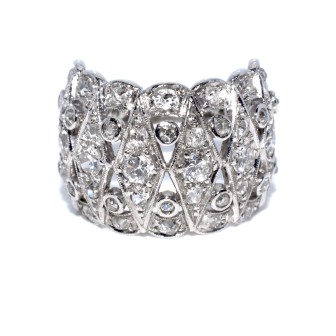
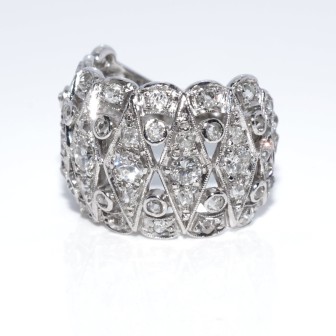
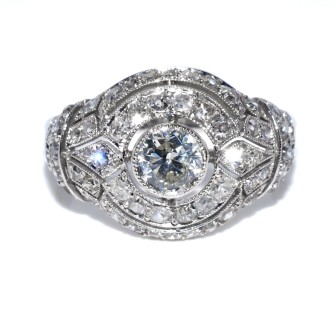
Rings include plaque rings, solitaires, trilogy rings and cluster designs. Bracelets often feature articulated sequences of geometric motifs, sometimes entirely set with diamonds.
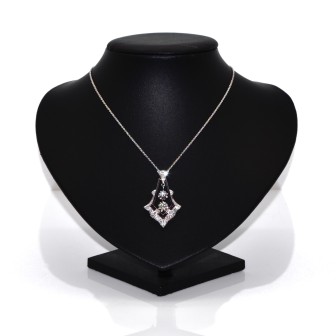
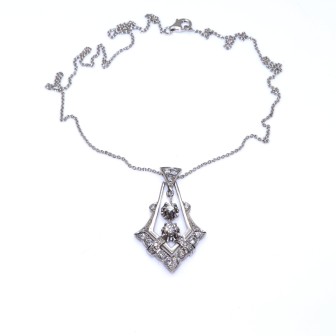
Earrings and pendants make greater use of vertical lines and articulated elements, while brooches, clips and watches provide jewellers with particularly suitable surfaces for graphic compositions.
Despite this diversity, the same pursuit of balance, precision and geometry can be found throughout the period.
Why Does This Jewellery Still Look Modern?
One of the most remarkable characteristics of the period is that jewels created almost a century ago can still look surprisingly contemporary.
Their modernity comes from the clarity of their lines, balanced proportions and graphic compositions. This also explains why contemporary jewellers continue to draw extensively on this aesthetic.
A modern creation may therefore closely resemble an original from the 1920s. The fundamental difference lies in its history: one is inspired by the period; the other actually comes from it.
The first question is therefore whether you are looking for an authentic period jewel or simply a piece inspired by the style.
For an antique piece, condition should be examined carefully. Stone settings, articulated elements, gemstones and previous restorations are particularly important when assessing jewellery that is now approaching a century old.
Hallmarks, signatures and numbers should also be examined when present. For significant gemstones, a report from a recognized gemmological laboratory can provide additional information.
An earlier restoration is not necessarily problematic, provided that it respects, as far as possible, the original construction and historical character of the jewel.
At Héritage de France®, of course! We specialize in antique jewellery and offer in Paris a selection of authentic period Art Deco jewellery, primarily dating from the 1920s and 1930s.
Our selection regularly includes rings, bracelets, earrings, pendants, brooches and watches in platinum or 18k gold, set with diamonds and coloured gemstones.
Before being offered for sale, each jewel is examined with particular attention to its gemstones, precious metals, construction techniques and settings, as well as hallmarks and signatures when present.
This distinction is fundamental to our selection: a period jewel is a genuine witness to the jewellery of the 1920s and 1930s; a modern Art Deco-style jewel is a contemporary interpretation of it.
Résultats 25 à 48 sur 48