3 400 €
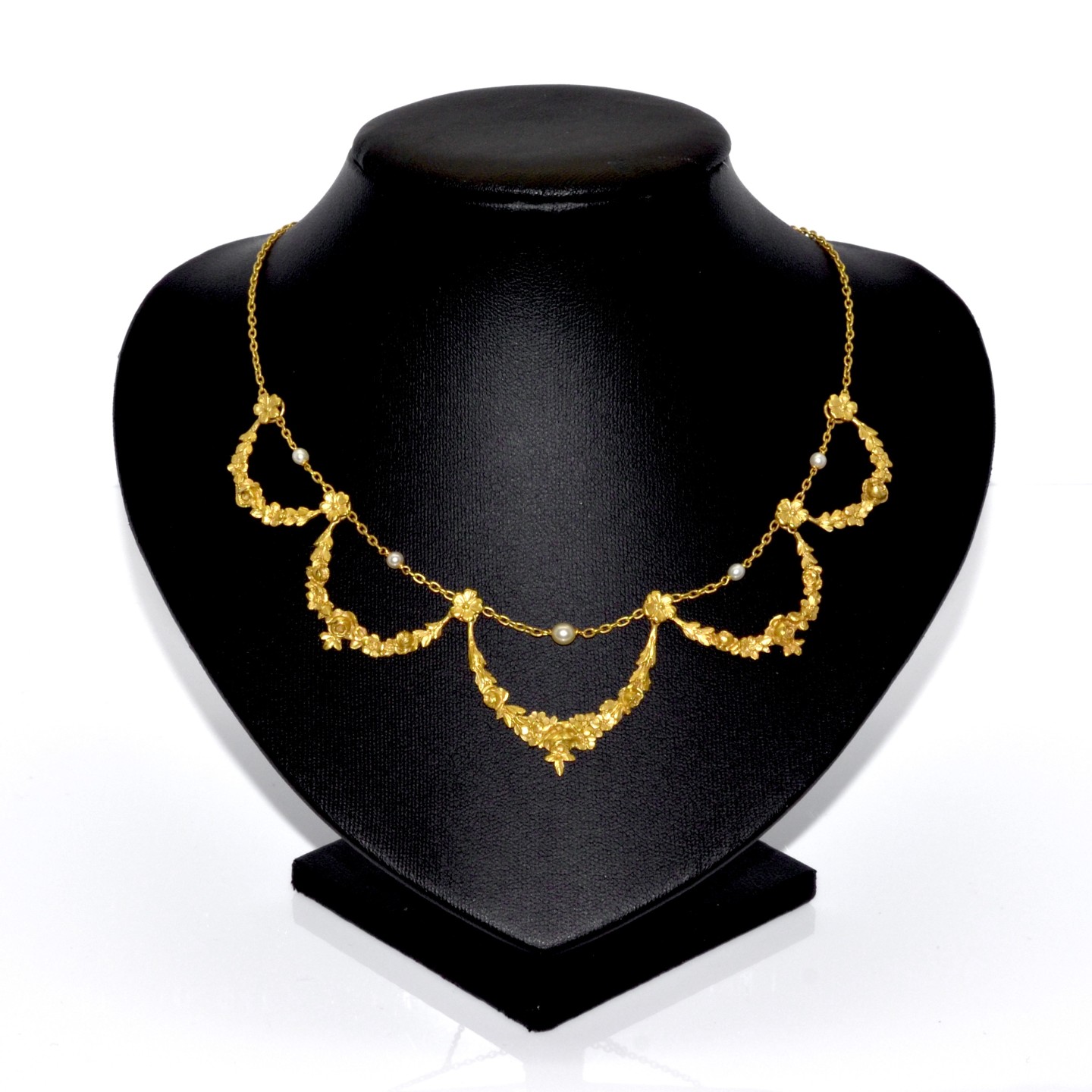
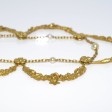
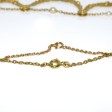
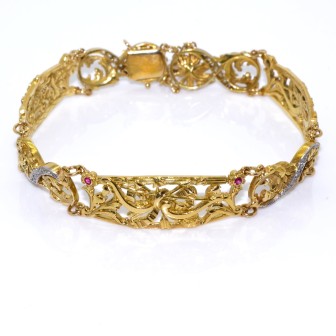
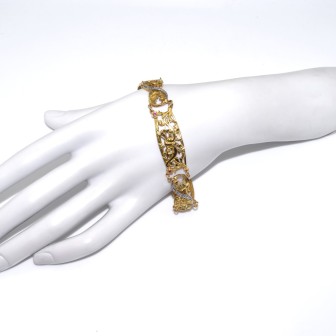
Hide pricesThis lovely drapery necklace with flower motif is in 18K gold is a beautiful piece of antique jewelry, a classic of its time. When worn, it lies flat.
| Weight of the necklace | 18,60 g |
|---|---|
| Length of the chain (cm) | 41 |
| Dimensions of a motif (cm) | 3 x 3,5 |
| Ref. | #7019 |
|---|
In nineteenth-century France, draperies crafted in eighteen-carat gold represented a remarkable expression of luxury, technical mastery, and artistic sensibility in jewelry and goldsmithing. Inspired by the folds of classical textiles seen in Greco-Roman sculpture, as well as by decorative traditions inherited from the eighteenth century, these draperies were designed to imitate the fluidity and softness of fabric through metal. They appeared in the form of cascading chains, garlands, and articulated elements incorporated into necklaces, bracelets, brooches, and elaborate parures, and were sometimes worn as ornaments on bodices or in the hair.
Eighteen-carat gold was especially well suited to this type of work, offering an ideal balance between strength and malleability. Its properties allowed craftsmen to shape supple, flexible structures capable of moving naturally with the body while maintaining durability. Draperies could be smooth and polished or finely chased, and were often enriched with pearls, gemstones, or enamel, depending on fashion trends and the social standing of the wearer.
These gold draperies were particularly fashionable during the Restoration and the Second Empire, when women’s dress emphasized elegance, opulence, and classical references. Worn at balls, formal receptions, and court events, they conveyed wealth, status, and refined taste. Their movement and shimmer enhanced the visual impact of evening attire, contributing to an overall impression of grace and sophistication.
Today, nineteenth-century gold draperies are admired for their exceptional craftsmanship and artistic ambition. They illustrate the French jeweler’s ability to transform rigid material into flowing form, reflecting a period in which technical expertise, aesthetic harmony, and luxury were inseparably linked.