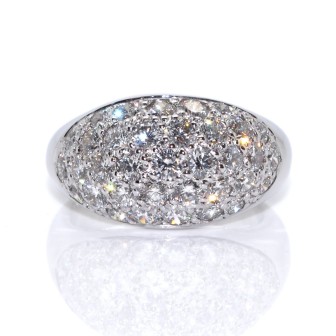
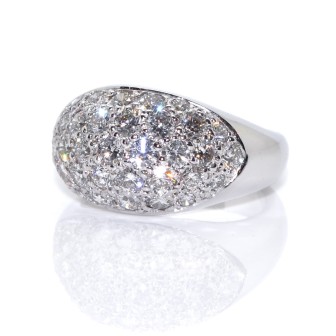
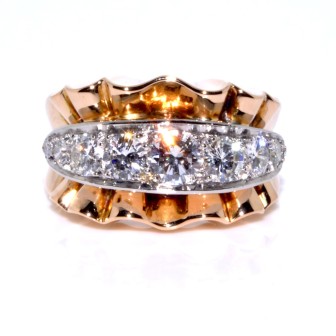
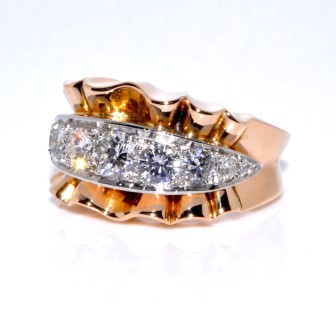
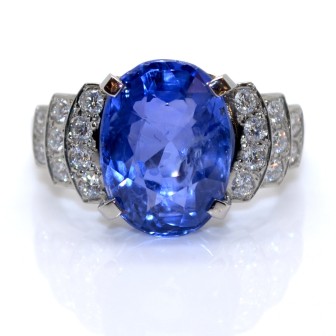
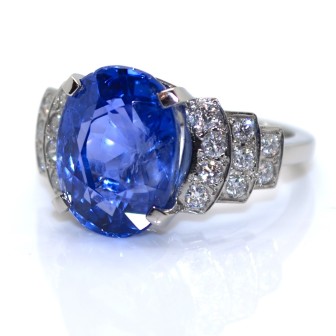
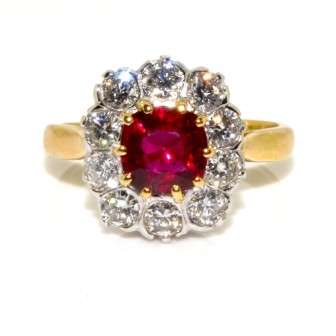
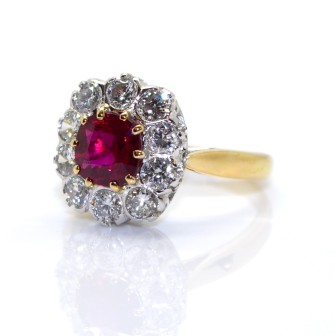
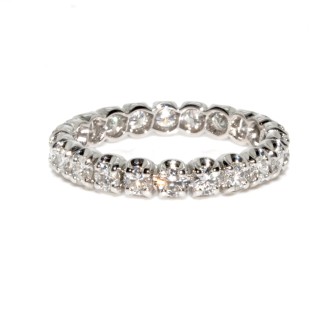
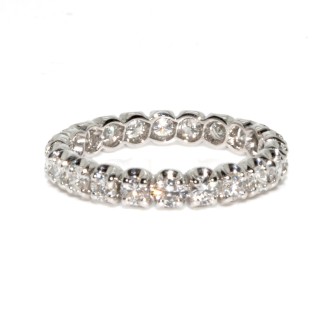
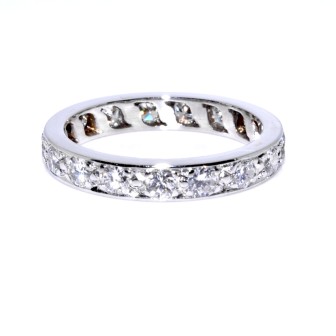
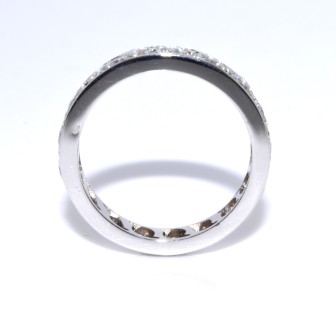
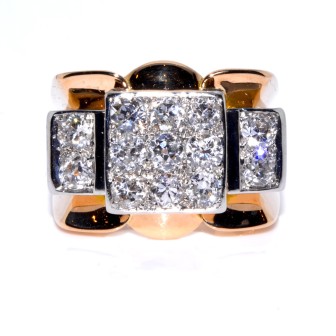
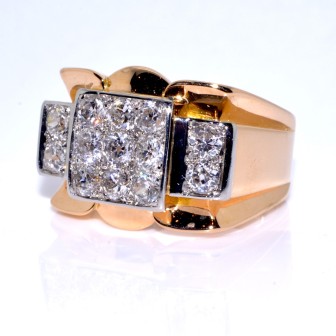
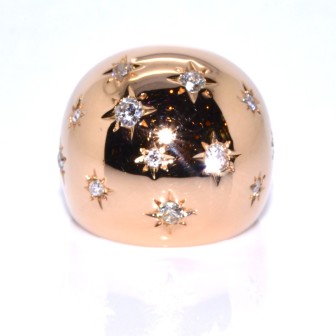
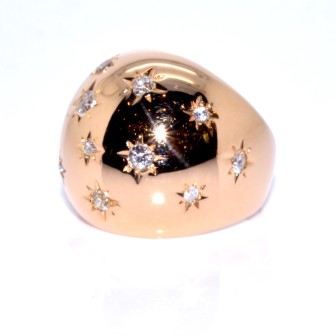
There are many different types of engagement rings: solitaire, Pompadour, cluster, trilogy, toi-et-moi, marquise, Art Deco, or rings set with sapphires, rubies or emeralds.
The choice naturally depends on the gemstone, but also on the design of the ring, its proportions, its period and how it will be worn.
At Héritage de France®, we favour rings with a distinctive character. Our selection includes antique pieces, vintage jewellery and Héritage de France® creations, some of which are made using gemstones removed from antique jewellery.
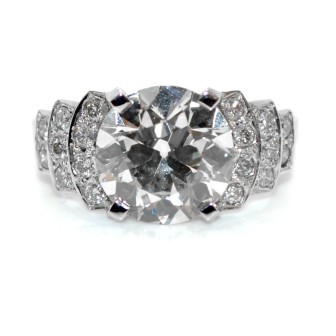
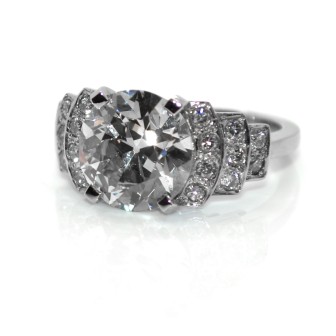
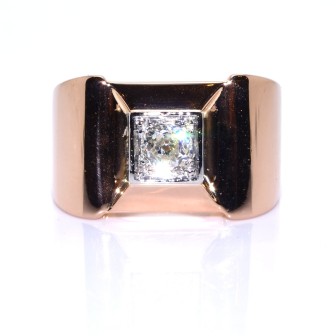
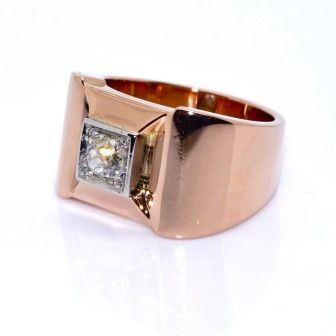
The solitaire is probably the design most immediately associated with engagement rings. A single principal gemstone forms the centre of the ring, most commonly a diamond.
The apparent simplicity of a solitaire gives particular importance to the proportions of both the gemstone and its setting. Round, oval, cushion, pear and emerald-cut diamonds can produce very different effects on the hand.
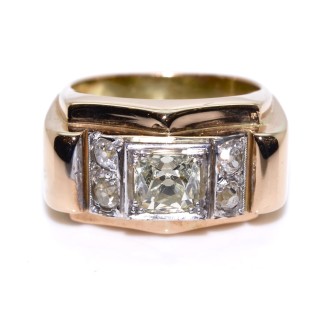
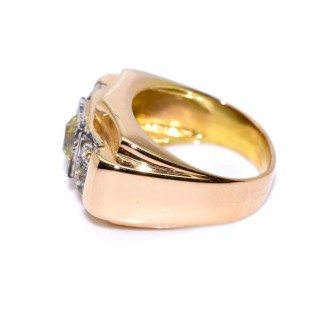
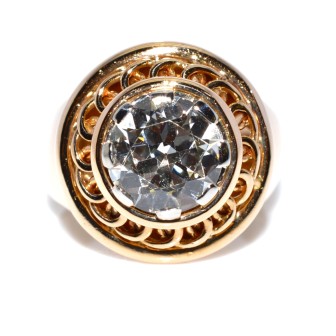
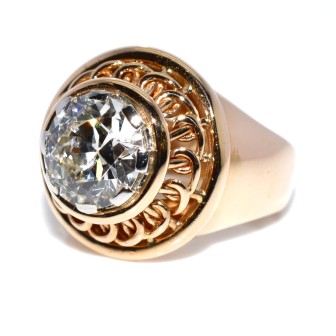
Antique rings may also feature old-cut diamonds, whose faceting and proportions differ from those of modern brilliant-cut diamonds.
A solitaire can therefore be highly classic or much more distinctive depending on its period and the cut of its diamond.
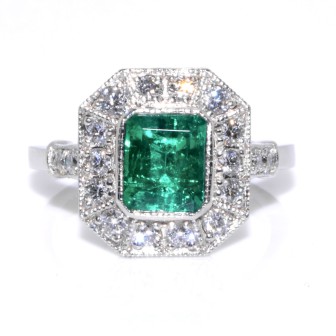
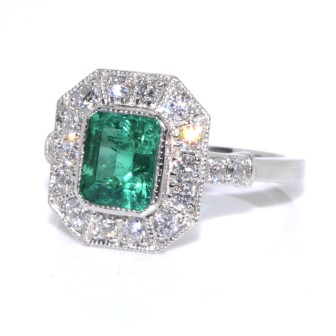
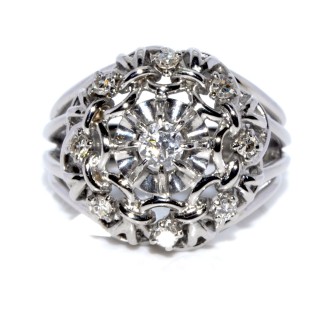
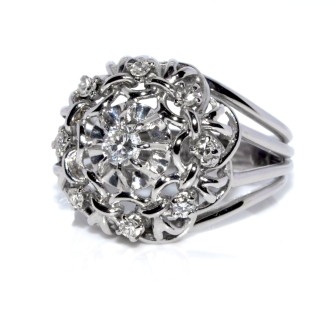
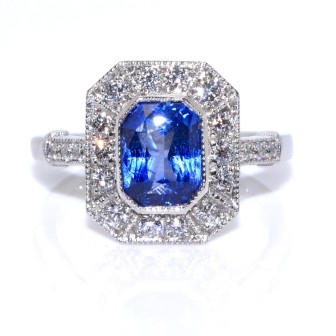
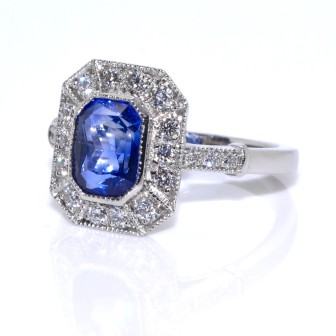
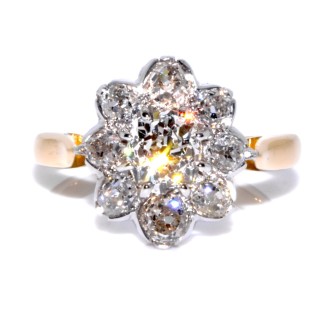
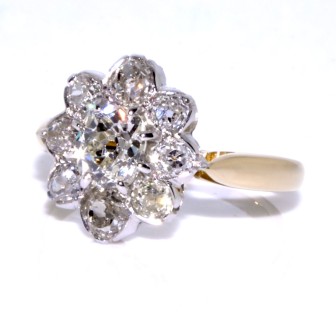
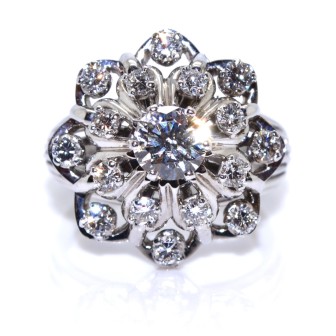
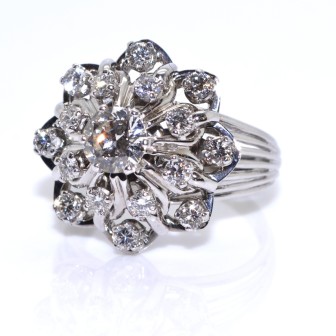
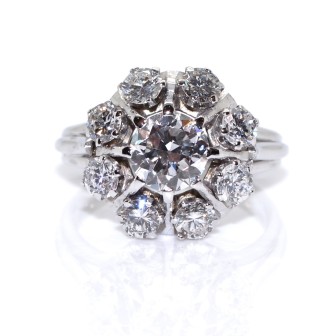
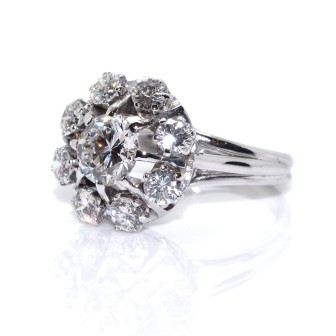
A Pompadour ring features a central gemstone surrounded by a border of diamonds. This construction, also known as a cluster ring, gives the centre stone greater presence while creating a particularly balanced composition.
The centre may be a diamond, sapphire, ruby or emerald. Oval designs are especially characteristic, although round, cushion-shaped and more unusual proportions can also be found.
Antique jewellery provides numerous examples of this type of setting. Héritage de France® also creates certain new Pompadour rings using antique gemstones removed from period jewellery and reset in newly made settings.
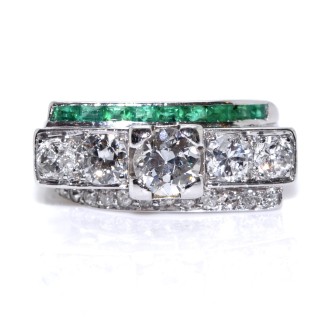
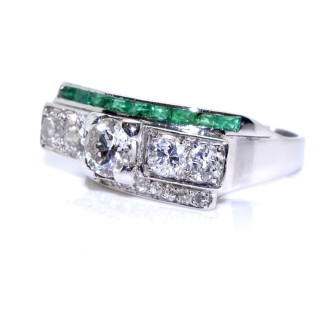
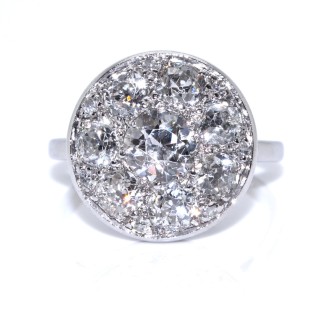
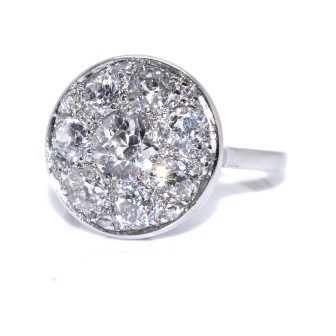
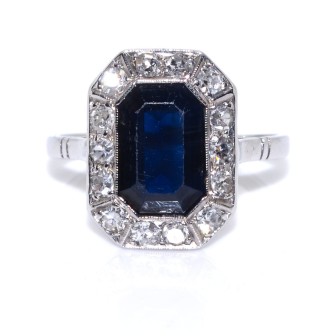
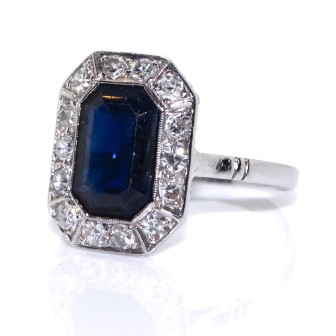
Authentic period Art Deco rings, primarily dating from the 1920s and 1930s, offer an alternative to the traditional solitaire.
Their designs place greater emphasis on geometry, symmetry and architectural construction. Platinum and diamonds are particularly characteristic, sometimes combined with sapphires, rubies, emeralds or onyx.
Some are constructed around a principal gemstone, while others take the form of plaque rings in which several diamonds form part of a larger composition.
An authentic period Art Deco ring should be distinguished from a contemporary ring that is simply inspired by the style.
A trilogy ring consists of three principal gemstones positioned side by side.
The centre stone is generally the largest, accompanied by two side stones that visually extend the composition across the finger.
All three stones may be diamonds, or a coloured gemstone may be combined with two diamonds. On antique examples, variations in the cuts and proportions of the individual stones can give the ring considerable character.
A trilogy is therefore an interesting alternative to a solitaire for someone looking for greater presence on the hand without choosing a complete diamond surround.
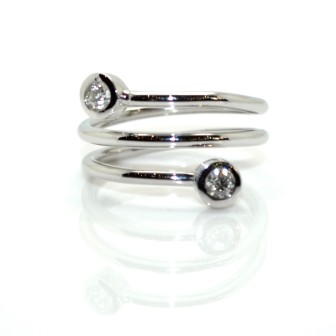
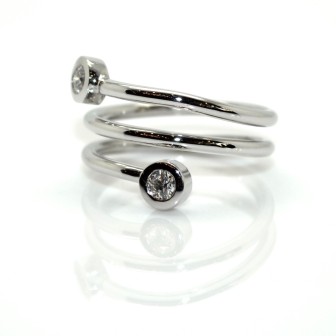
The toi-et-moi ring is characterized by two principal gemstones positioned opposite each other or slightly offset.
The stones may be identical or different: two diamonds, for example, or a diamond combined with a sapphire, ruby or another coloured gemstone.
Historically, this design is particularly well suited to engagement jewellery because of the symbolism of two gemstones brought together within a single composition.
Antique examples range from relatively simple settings to more elaborate designs embellished with smaller diamonds.
The marquise ring is recognizable by its elongated form, which visually follows the length of the finger.
Antique examples may be composed of several old-cut diamonds or feature a principal gemstone surrounded by smaller stones.
Its elongated proportions can create considerable presence on the hand without necessarily requiring a centre stone of very high carat weight.
Antique marquise rings therefore offer an interesting option for anyone looking for an engagement ring that differs from the traditional solitaire.
The diamond remains the gemstone most traditionally associated with engagement rings, particularly because of its hardness and suitability for regular wear.
Sapphire is an excellent alternative. Its high hardness and wide range of colours allow for very different designs, particularly when surrounded by diamonds.
Ruby, which like sapphire belongs to the corundum family, also offers excellent hardness.
Emerald provides a very different aesthetic but generally requires greater care because of its lower toughness and the inclusions commonly found within the stone.
The choice should therefore take into account not only colour and appearance, but also durability, setting and how the ring will be worn on a daily basis.
Antique engagement rings may feature old-cut diamonds, whose proportions and faceting differ from those of modern brilliant cuts.
Because their cutting was less standardized, individual antique diamonds can display considerable variation and character. Their broader facets and different proportions can create a visual appearance quite unlike that of a contemporary diamond.
These stones may remain in their original settings or, when an antique jewel can no longer be worn, they may be removed and reset.
Some Héritage de France® creations therefore combine old diamonds with newly made settings. An antique diamond does not necessarily mean that the ring itself is antique.
Whatever engagement ring design you choose, it is important to distinguish the period in which the jewel itself was made.
An antique ring is an authentic period piece. At Héritage de France®, this category primarily includes jewellery dating from the 19th century through to the 1940s.
A vintage ring is also a genuine period jewel, but a more recent one, generally dating from the 1950s to the 1980s.
A Héritage de France® creation has a newly made setting. Some of our creations use diamonds, sapphires, rubies or emeralds removed from antique or vintage jewellery.
The distinction is straightforward: an antique gemstone can be set in a new ring; this does not make the ring itself antique.
At Héritage de France®, of course!
We offer in Paris a selection of antique and vintage engagement rings, as well as Héritage de France® creations.
Our collection allows you to compare different designs, including solitaires, Pompadour and cluster rings, Art Deco rings, trilogies, toi-et-moi and marquise rings, set with diamonds, sapphires, rubies or emeralds.
Some pieces are entirely antique or vintage, while others are contemporary creations made, in particular, using gemstones sourced from antique jewellery.
Before being offered for sale, each ring is examined to assess its gemstones, precious metals, settings and construction. Restoration or resizing may be carried out when necessary.
Choosing an engagement ring can therefore begin with one simple question: which type of ring best reflects the personality and style of the person who will wear it?
Résultats 145 à 168 sur 210