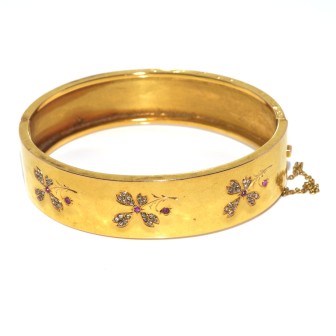
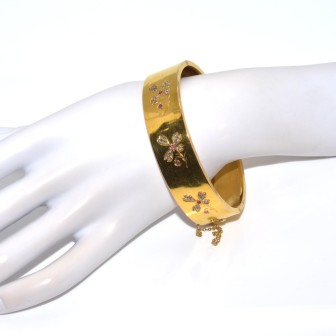
The term Napoleon III jewellery generally refers to French jewellery made during the Second Empire and, by extension, to certain pieces from the second half of the 19th century that continued its aesthetic traditions.
The reign of Napoleon III, from 1852 to 1870, was a particularly rich period for French decorative arts and jewellery. Designs drew inspiration from a wide range of sources, including naturalistic motifs, historical references, Antiquity, floral compositions and architectural ornament.
There is therefore no single “Napoleon III style”, but rather a broad variety of jewels sharing the techniques and decorative vocabulary of their period.
An antique appearance alone is not sufficient to date a jewel.
Examination should include the construction of the setting, stone-setting techniques, soldering, clasps, articulated elements, hallmarks and manufacturing methods.
The gemstones can also provide useful indications. Diamonds may be rose-cut or fashioned in various old cuts, all of which predate the standardization of the modern brilliant cut.
French guarantee and maker’s marks, when present and legible, can provide additional information. However, none of these characteristics is sufficient on its own to establish a precise date: the jewel must be considered as a whole.
One combination frequently encountered in 19th-century French jewellery is gold and silver.
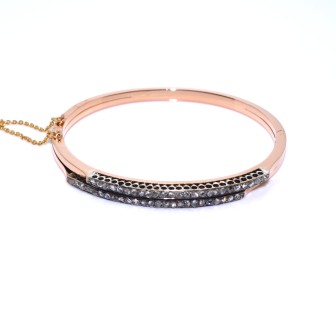
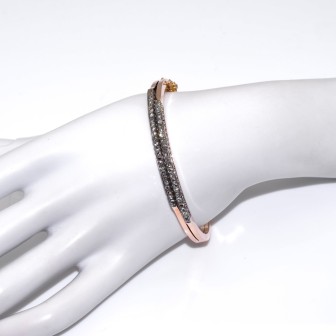
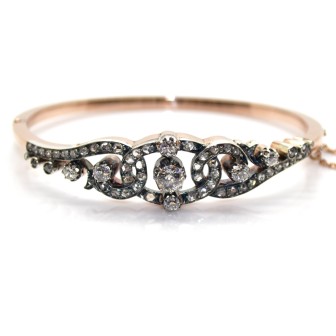
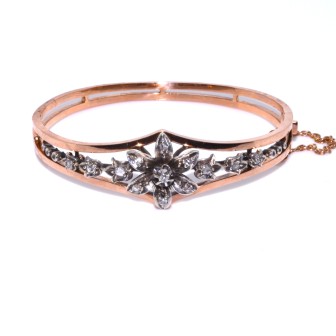
Gold, particularly yellow or rose gold, may form the structure of the jewel, while diamonds are set in silver. On certain pieces, oxidized or darkened silver creates a pronounced contrast with the brilliance of the stones.
This construction differs significantly from the platinum settings that became increasingly prevalent in fine jewellery several decades later.
18k gold, silver and old-cut or rose-cut diamonds are therefore characteristic of many of the period pieces selected by Héritage de France®.
Nature was an important source of inspiration.
Flowers, foliage, bees, flies, dragonflies and other insects may be represented realistically or in a more stylized manner. Petals and wings are sometimes set with diamonds, while the gold elements may be finely chased.
Cameos, historical motifs and more architectural compositions further demonstrate the diversity of influences found in jewellery from the second half of the 19th century.
This variety explains why two jewels from the same period can look very different while sharing comparable manufacturing techniques.
Jewellery from this period takes an exceptionally wide variety of forms.
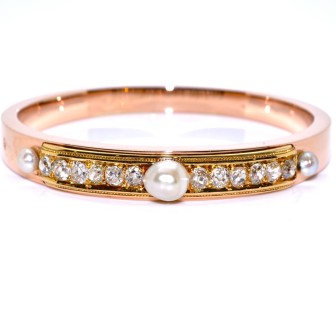
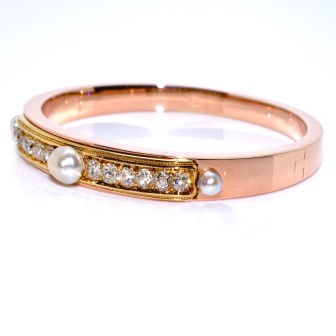
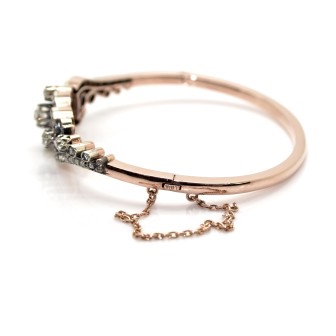
Bangle bracelets are an important category. They may be made in 18k gold, combined with silver and set with rose-cut or old-cut diamonds. Other examples emphasize finely worked gold, chased decoration, enamel or pearls.
Drop earrings make particular use of movement and may combine diamonds, pearls, cameos or coloured gemstones.
Brooches, pendants and lockets also display a remarkable variety of forms, ranging from naturalistic motifs to more geometric compositions.
Diamonds occupy an important place in jewellery of this period, but 19th-century jewellery was by no means limited to colourless stones.
Emeralds, rubies and sapphires, as well as pearls and various ornamental stones, may be combined with gold and diamonds.
When examining an antique jewel, it is particularly important to consider a gemstone in its original context. Its cut, setting and consistency with the mount may provide information that is just as significant as its carat weight.
For important gemstones, examination by an independent gemmological laboratory may provide additional information about their identity and any detectable treatments.
Despite its age, some jewellery from the second half of the 19th century can look surprisingly modern when worn today.
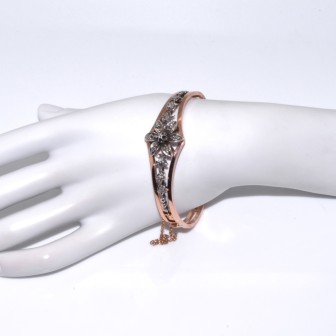
A rose gold and diamond bangle, a pair of drop earrings or an insect brooch can be combined very naturally with contemporary clothing.
This contrast is precisely part of their appeal: their craftsmanship and gemstones clearly belong to the 19th century, while their proportions and certain aspects of their design can still feel highly current.
They can therefore be worn as genuine pieces of jewellery rather than simply regarded as historical or collectible objects.
A jewel from this period is now more than 150 years old, making its state of preservation particularly important.
Stone settings, soldering, clasps, articulated elements and safety mechanisms should be carefully examined. Any previous restorations, alterations or replacement stones should also be identified.
Restoration is not necessarily problematic on a jewel of this age. However, it should respect, as far as possible, the original construction, materials and character of the piece.
Hallmarks and signatures should also be examined when present.
At Héritage de France®, we offer in Paris a selection of authentic antique jewellery from the Napoleon III period and the second half of the 19th century.
Our collection includes bangle bracelets, earrings, brooches, pendants, rings and necklaces in 18k gold, silver, diamonds, coloured gemstones, pearls and enamel.
Before being offered for sale, each jewel is examined to assess its gemstones, precious metals, settings and fastening systems, as well as hallmarks and signatures when present. Any necessary restoration may then be entrusted to our workshop.
The distinction is essential: an authentic Napoleon III jewel is a genuine 19th-century period piece; a modern Napoleon III-style jewel is a later creation inspired by its aesthetic.
Résultats 25 à 44 sur 44